-
Engagement ringsWedding ringsEternity ringsDiamondsGemstones
Platinum Solitaire Engagement Rings
What defines a platinum solitaire engagement ring?
A platinum solitaire engagement ring is a single-stone design set in 950 platinum, where the centre stone is held by claws or a bezel on an unbroken band with no side stones or pavé. The pairing matters: platinum is roughly 60% denser than 18ct gold and naturally white, so it holds claws securely over decades and frames a centre stone — diamond, fancy-colour diamond, or coloured gemstone — without warming or yellowing its appearance. Six-claw heads lift the stone for maximum light return; four-claw heads sit lower and show more of the stone's outline. The shank is usually 1.8mm to 2.2mm — narrow enough to read as delicate, wide enough to carry a 1ct-plus stone without flex.
Why choose platinum over white gold for a solitaire?
Platinum is the better metal for a solitaire when the priority is claw security and a permanently white finish. White gold is gold mixed with white alloys and rhodium-plated to look bright; the plating wears and needs reapplying every few years. Platinum is white throughout, so as it ages it develops a soft patina rather than fading. For a solitaire specifically — where the claws are the only thing holding the centre stone — platinum's density gives more bite and resists bending. The trade-off is weight and price: a platinum solitaire feels noticeably heavier on the finger and costs more per gram than gold. For a single-stone ring meant to be worn daily for life, most clients we see in Hatton Garden choose platinum.
What does a platinum solitaire engagement ring cost in the UK?
The centre stone drives the price of a platinum solitaire — typically 70-85% of the total. Platinum itself adds a fixed premium over gold (roughly $550-$1,050 more on the setting alone, depending on shank weight), but the centre diamond or gemstone is where budgets are spent. Bridebook's US average engagement ring spend of $6,000 covers a well-cut 0.5ct natural diamond solitaire in platinum, or a 1ct-plus lab-grown diamond solitaire at the same spec. Fancy-colour diamonds and fine sapphires sit higher per carat. We quote each platinum solitaire transparently: certified centre stone, platinum setting, hallmarking, and insured delivery, with no markup hidden in the metal weight.
How long does a made-to-order platinum solitaire take?
A platinum solitaire engagement ring takes 7-14 business days from order confirmation. After the centre stone is chosen, we produce a CAD design for approval, then cast a silver or wax sample for try-on at our Hatton Garden showroom so the proportions, claw height and shank width can be checked on the finger before the platinum is cast. Platinum casting itself takes longer than gold because of the metal's higher melting point, which is why solitaires sit nearer the middle of the range rather than the fast end. Once cast, the stone is set, the ring is polished, hallmarked at the London Assay Office, and delivered insured anywhere in the UK at no charge.
Caring for a platinum solitaire over a lifetime
Platinum solitaires are the lowest-maintenance engagement ring we make. The metal doesn't need re-plating, the single-stone setting has no pavé to lose, and the claws — if checked every two or three years — will hold the centre stone indefinitely. A platinum solitaire pairs cleanly with a platinum wedding band: matched metal density means the two rings wear together rather than the softer one abrading the harder. Over years of daily wear, expect the high polish to soften into a brushed patina; this can be re-polished on request, or left as the natural finish many clients prefer. Resizing is free for life.
Frequently asked questions
Is a platinum solitaire engagement ring worth it in the UK?
For a ring intended for daily wear over decades, yes. Platinum's density holds the claws on a solitaire more securely than white gold, and its colour is permanent rather than plated. The upfront cost is higher than 18ct white gold by roughly $550-$1,050 on the setting, but there are no rhodium-replating costs over the ring's lifetime.
Four claws or six claws on a platinum solitaire?
Six claws lift the stone higher and give maximum light return, which suits round brilliant diamonds and works well above 1ct. Four claws sit lower, show more of the stone's outline, and suit fancy shapes — oval, emerald, cushion — where the silhouette is part of the appeal. Both are equally secure in platinum.
Can I set a coloured gemstone in a platinum solitaire?
Yes. Sapphires, rubies, emeralds and fancy-colour diamonds all set well in platinum solitaire settings. Platinum's neutral white tone lets the gemstone's colour read true without warming it the way yellow gold would. We certify every centre stone — GIA, HRD or IGI for diamonds, recognised gemmological reports for coloured stones.
How thick should the platinum band be?
Most platinum solitaire shanks are 1.8mm to 2.2mm wide and 1.4mm to 1.7mm deep. A narrower band looks more delicate but flexes more over years of wear; a wider band carries larger centre stones without strain. We advise on the right proportions when the silver sample is tried on at the Hatton Garden showroom.
Does a platinum solitaire come with certification and warranty?
Every platinum solitaire is hallmarked at the London Assay Office and comes with the centre stone's grading certificate from GIA, HRD or IGI for diamonds, or the relevant gemmological report for coloured stones. The ring carries a lifetime warranty, free resizing for life, and 30-day returns excluding bespoke commissions.
Featured platinum solitaire engagement rings
Hand-selected pieces from the President Jewellers catalogue
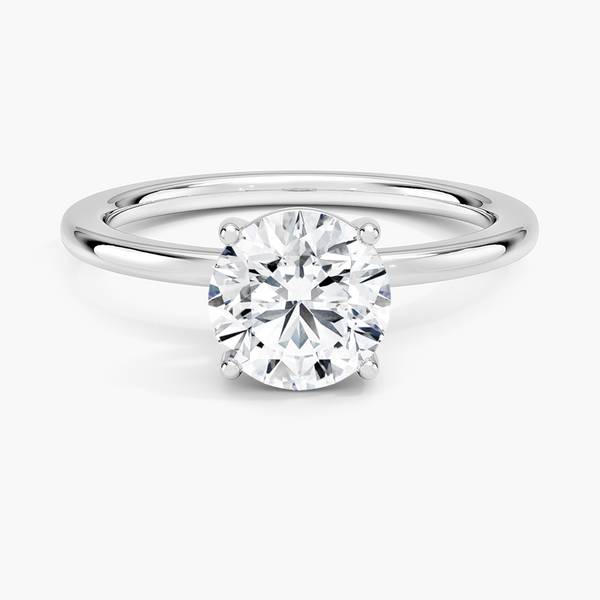
Solitaire Engagement Ring
$1,419.00

East West Tapered Baguette Diamond Engagement Ring
$1,738.00
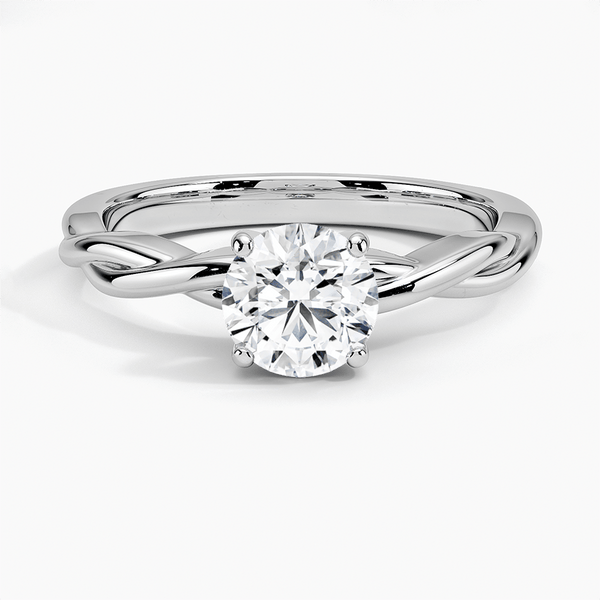
Twisted Vine Solitaire Engagement Ring
$1,649.00
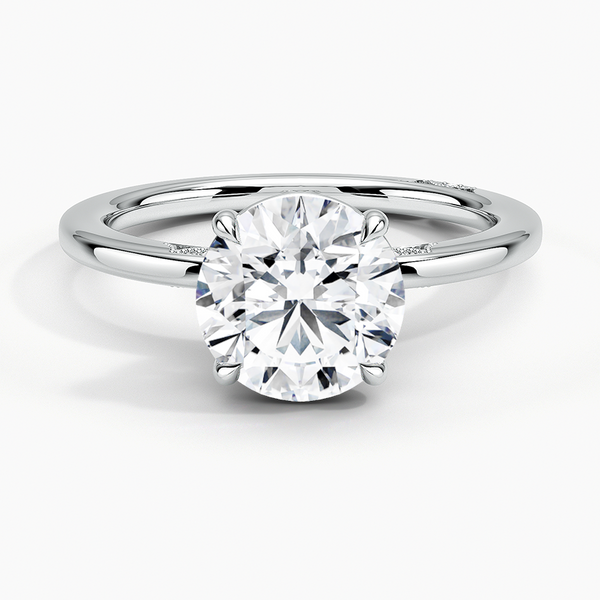
Simply Tacori Delicate Drape Diamond Engagement Ring
$2,790.00
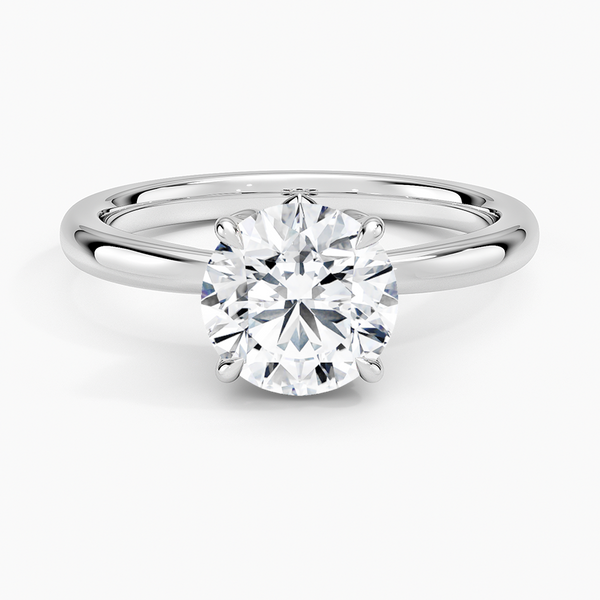
Petal Solitaire Engagement Ring
$1,826.00
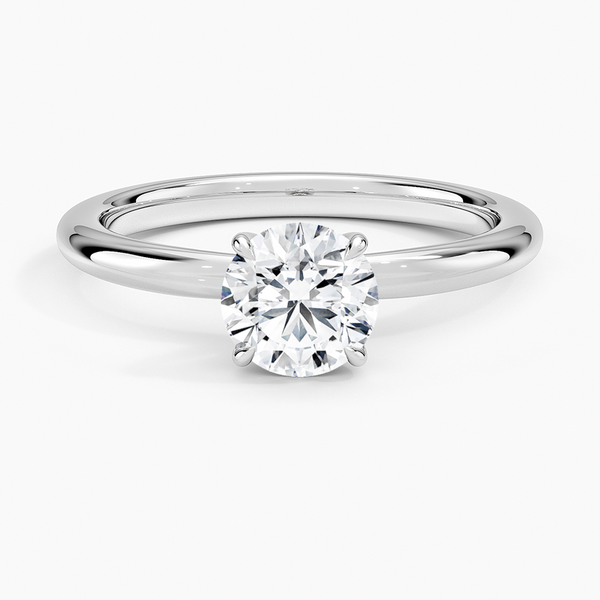
Manon Solitaire Engagement Ring
$1,596.00
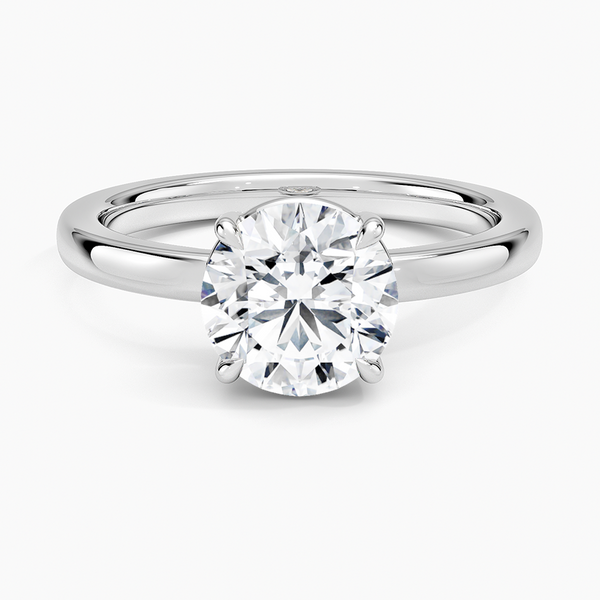
Dara Low-Profile Solitaire Engagement Ring
$1,685.00
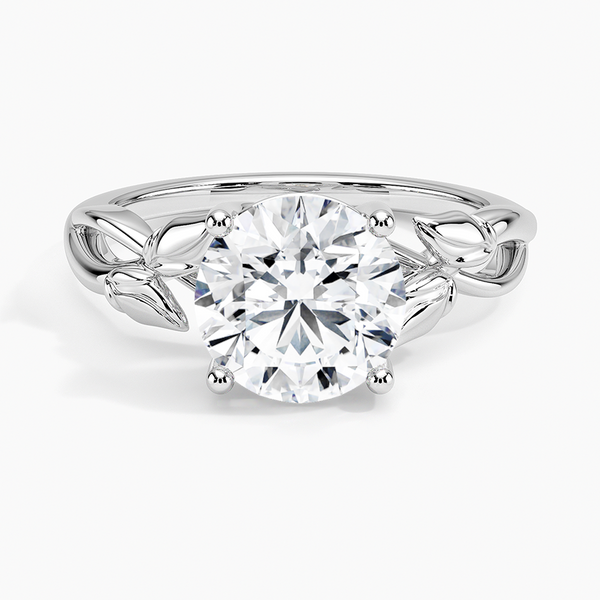
Budding Willow Solitaire Engagement Ring
$1,419.00
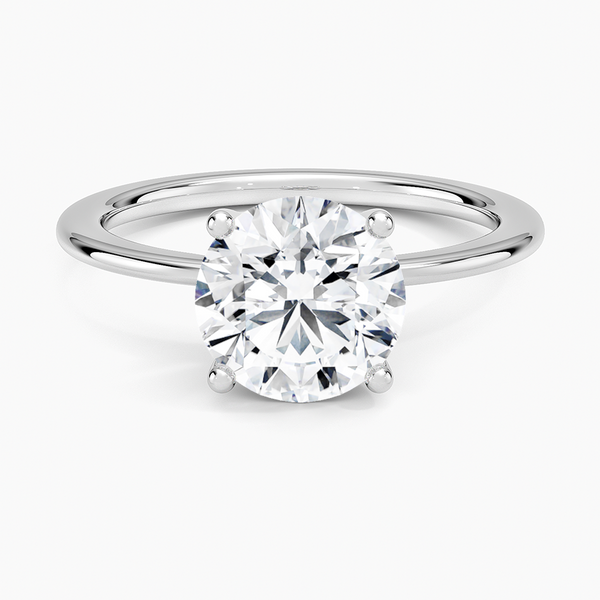
Aimee Solitaire Engagement Ring
$1,419.00
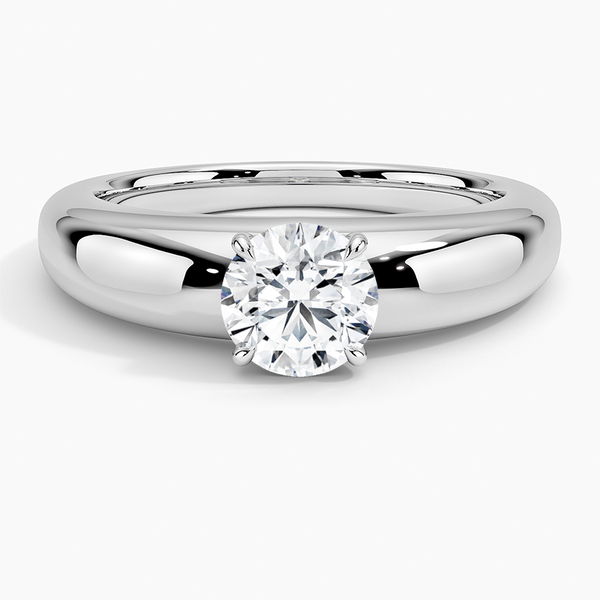
Adrian Solitaire Engagement Ring
$2,003.00
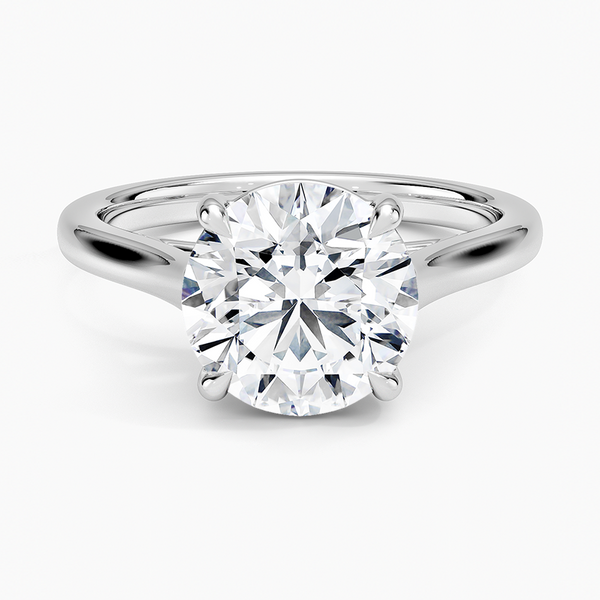
Provence Solitaire Engagement Ring
$1,773.00
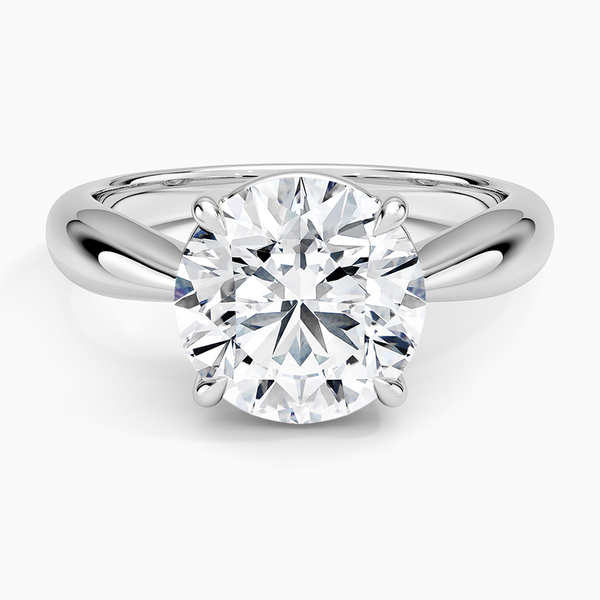
Thea Tapered Solitaire Diamond Engagement Ring
$1,950.00
You might also like
Related collections and pages from President Jewellers
Designing your ring
Designed online. Made by hand.
The convenience of online design.
-
Visualise it
Detailed CADs from every angle, so you see exactly what we’ll cast.
-
Try before we cast
Free ring sizers and a silver or wax sample to confirm the fit and feel before casting.
-
Hand-finished in London
Cast and finished in our London workshop and ready in 7–14 working days.
-
Risk-free
Every stone certified. Free refunds within 30 days (21 working) — no questions asked.
Three steps to your ring
-
1
Choose your starting point
-
2
Pair the two
-
3
We craft & deliver
From your first question to your finished ring — our Hatton Garden specialists are here throughout. Crafted for your forever.
From your first question to your finished ring — our Hatton Garden specialists are here throughout. Crafted for your forever.
