-
Engagement ringsWedding ringsEternity ringsDiamondsGemstones
Rose Gold Engagement Rings
What gives rose gold engagement rings their colour?
Rose gold is an alloy of pure gold and copper, with a small amount of silver to balance the tone. The copper content dictates how pink the metal reads — higher copper, deeper blush. The fine-gold percentage sets the carat. In 9ct rose gold the alloy is roughly 37.5% gold with a higher copper share, producing a stronger, redder hue. In 14ct (58.5% gold) the tone softens. In 18ct (75% gold) rose gold is gentler still, closer to a warm champagne-pink. All three carats are available for our rose gold engagement rings; the choice is largely aesthetic, though 9ct is harder-wearing and 18ct holds its colour against tarnish more steadily over decades.
Which diamonds and gemstones suit a rose gold setting?
Rose gold flatters warm-toned and faintly coloured stones especially well, because the pink cast masks any hint of yellow in a diamond's body colour. This means a near-colourless G-H-I diamond often looks as white as a D-F stone would in platinum, stretching the budget toward size or clarity. Morganite, peach sapphire, padparadscha sapphire, champagne diamond and cognac diamond all sit naturally in rose gold, the metal echoing their warmth. Cooler stones — aquamarine, blue sapphire, emerald — also work, creating a deliberate contrast rather than a tonal match. For fancy-colour diamonds, pink and champagne stones gain depth in rose gold, while a vivid yellow can read more golden against the blush band.
What does a rose gold engagement ring cost in the UK?
Price is driven by the carat of gold, the centre stone, and the setting complexity rather than the rose colour itself — rose, white and yellow gold of the same carat cost the same per gram. The centre stone is the largest variable: a 0.5ct certified diamond sits in a different bracket from a 1.5ct stone, and lab-grown diamonds typically come in lower per carat than natural at matched specifications. Bridebook's US average engagement ring spend of $6,000 is a useful anchor. Our rose gold engagement rings span well below and above that, from slim 9ct solitaires to 18ct hidden-halo and three-stone designs with larger certified centres.
How long does a made-to-order rose gold ring take?
Every rose gold engagement ring is made to order in 7-14 business days from confirmation, depending on complexity. The process begins with a consultation, in person at our Hatton Garden showroom or remotely. We produce a CAD design for approval, then a silver or wax sample for try-on so the proportions and finger fit can be checked before casting. Once approved, the ring is cast in 9ct, 14ct or 18ct rose gold, the centre stone set, the band finished and polished, and the piece hallmarked at the London Assay Office. Simple solitaires sit at the shorter end of the window; pavé, halo and bespoke designs run closer to fourteen business days.
Caring for and wearing rose gold day to day
Rose gold is harder-wearing than yellow gold of the same carat because copper is a tougher metal than fine gold, so the alloy resists scratches and dents reasonably well. The colour does not fade — the alloy is the same all the way through — but the surface polish softens over years of wear and benefits from occasional repolishing, which we offer to all customers. Rose gold pairs cleanly with white gold and platinum wedding bands for a two-tone stack, or with a matching rose gold band for a tonal finish. Resizing is free for life, and every rose gold engagement ring carries our lifetime warranty.
Frequently asked questions
Is rose gold a good choice for an engagement ring in the UK?
Yes. Rose gold is durable, holds its colour permanently, and suits a wide range of skin tones thanks to its warm pink cast. The copper content makes it harder-wearing than yellow gold of equivalent carat, which matters for a ring worn daily. It also flatters near-colourless diamonds and warm-toned gemstones, often allowing a slightly lower colour grade to read as white.
Does rose gold fade or tarnish over time?
No. The pink colour comes from copper alloyed throughout the metal, not a surface plating, so it cannot wear off. Rose gold can develop a softer patina with years of wear as the polish dulls, but a professional repolish restores the original finish. Unlike silver, rose gold does not tarnish under normal conditions.
What carat of rose gold should I choose — 9ct, 14ct or 18ct?
9ct rose gold reads the pinkest and is the hardest-wearing, suited to active hands. 14ct sits in the middle, balancing colour depth with gold content. 18ct rose gold is a softer, warmer blush and holds its colour against environmental factors most reliably long-term. All three are available across our rose gold engagement rings.
Can I pair a rose gold engagement ring with a white gold wedding band?
Yes, and the combination is increasingly chosen. Mixed-metal stacks have moved into the mainstream, and rose gold pairs cleanly with both white gold and platinum for contrast, or with yellow gold for a fully warm stack. We can match a wedding band to either tone, made in the same workshop and hallmarked at the London Assay Office.
Are the diamonds in your rose gold rings certified?
Yes. Every centre diamond is certified by GIA, HRD or IGI, covering cut, colour, clarity and carat. Natural diamonds come from ethical-mine partner suppliers; lab-grown diamonds come from established producers and are certified to the same standards. Coloured gemstone centres are supplied with the relevant grading or authenticity documentation.
Featured rose gold engagement rings
Hand-selected pieces from the President Jewellers catalogue
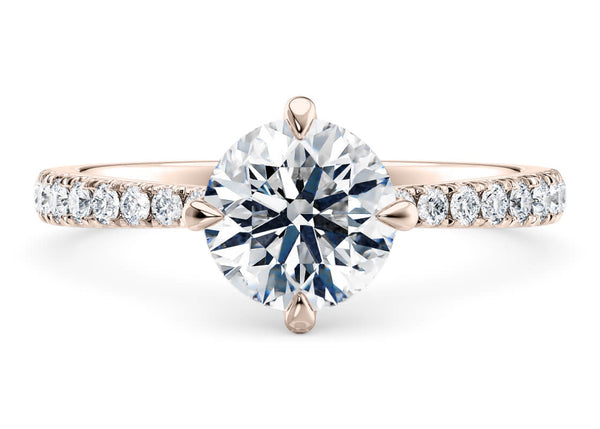
Asteria Compass Diamond Engagement Ring
$1,794.00
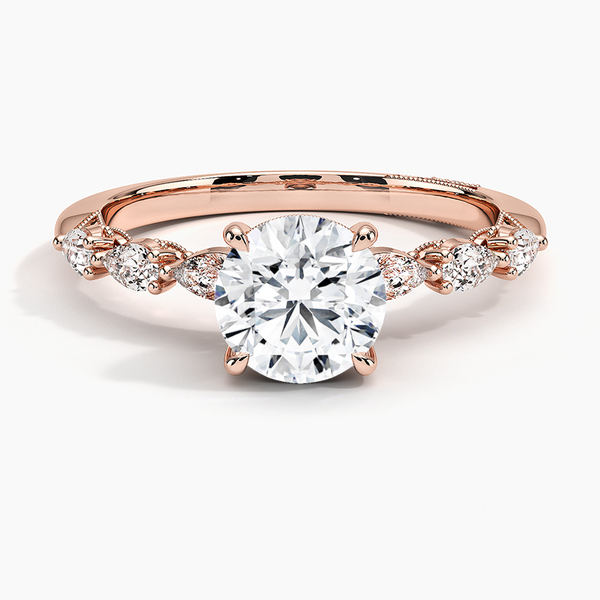
Tacori Sculpted Crescent Pear Diamond Engagement Ring
$4,338.00
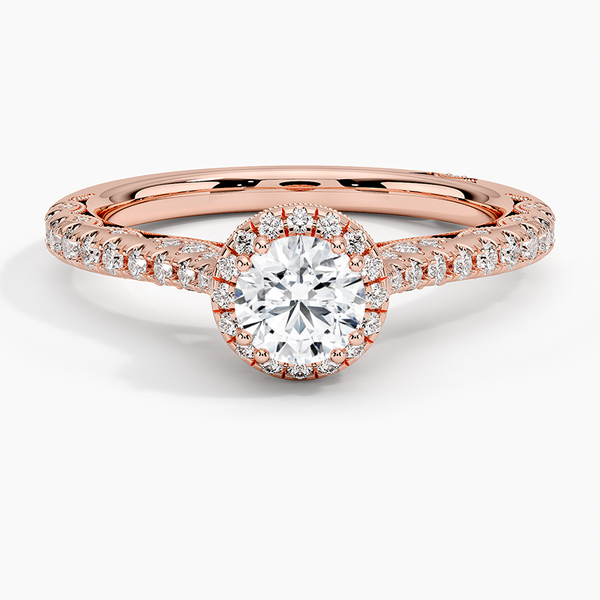
Tacori Petite Crescent Bloom Diamond Engagement Ring
$8,464.00
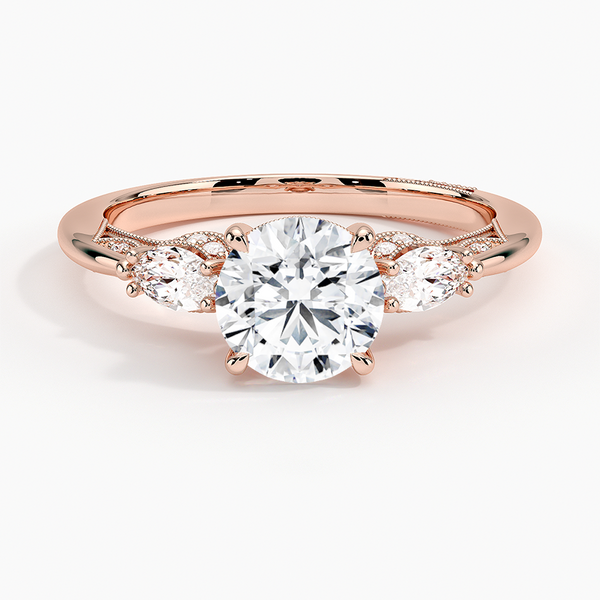
Simply Tacori Three Stone Marquise Diamond Engagement Ring
$6,353.00
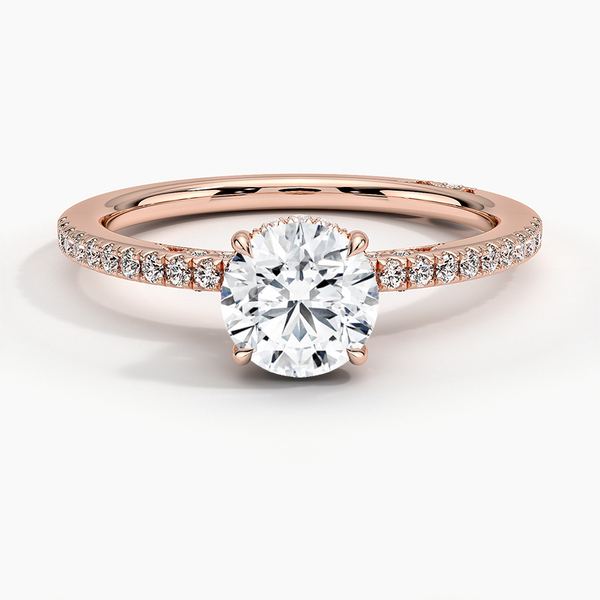
Simply Tacori Luxe Drape Diamond Engagement Ring
$4,338.00
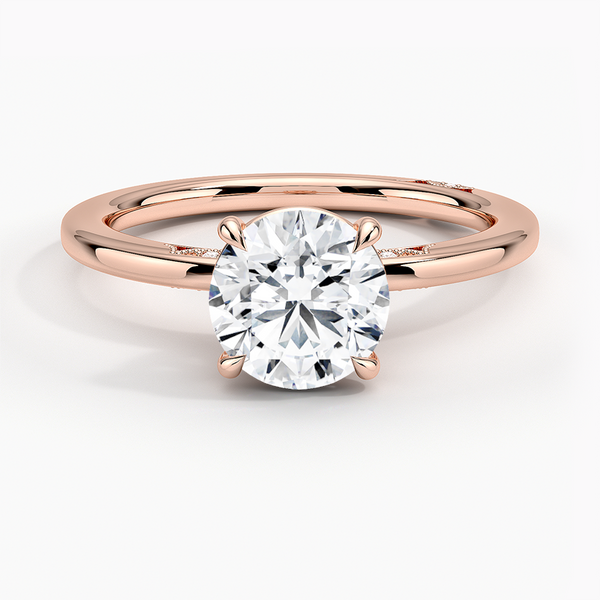
Simply Tacori Delicate Drape Diamond Engagement Ring
$2,998.00
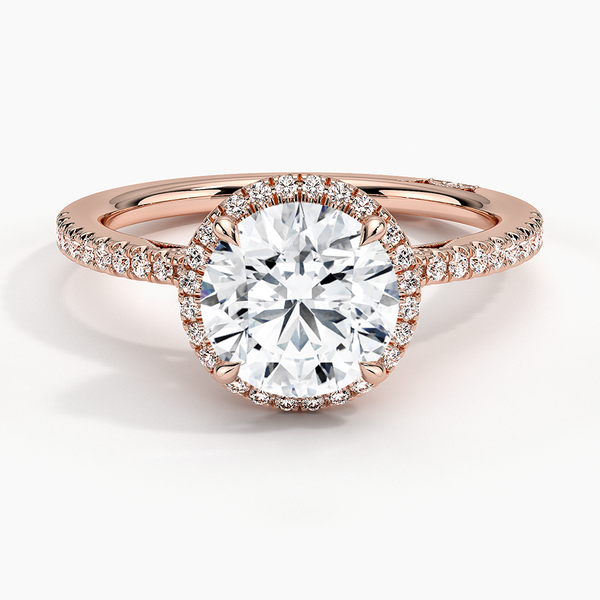
Simply Tacori Cathedral Drape Diamond Engagement Ring
$5,494.00
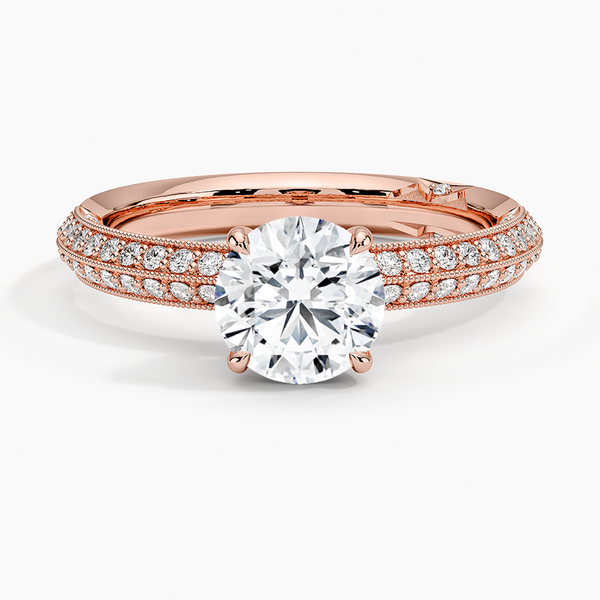
Tacori Sculpted Crescent Knife Edge Diamond Engagement Ring
$6,353.00
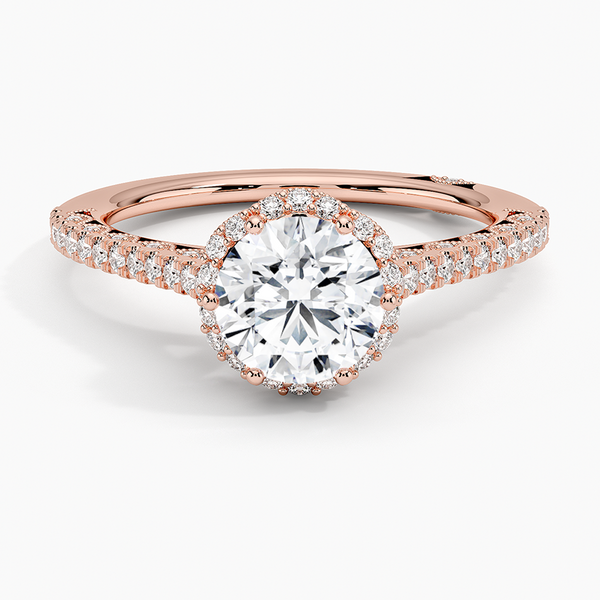
Tacori Petite Crescent Classic Bloom Diamond Engagement Ring
$7,092.00
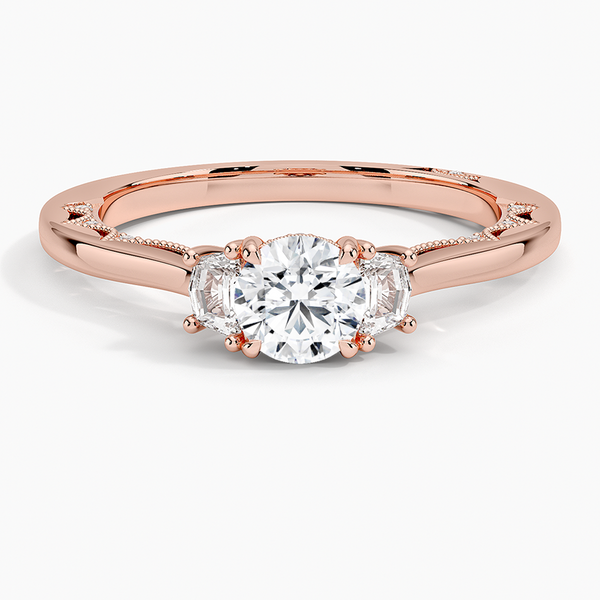
Tacori Lunetta Crescent Three Stone Diamond Engagement Ring
$7,408.00
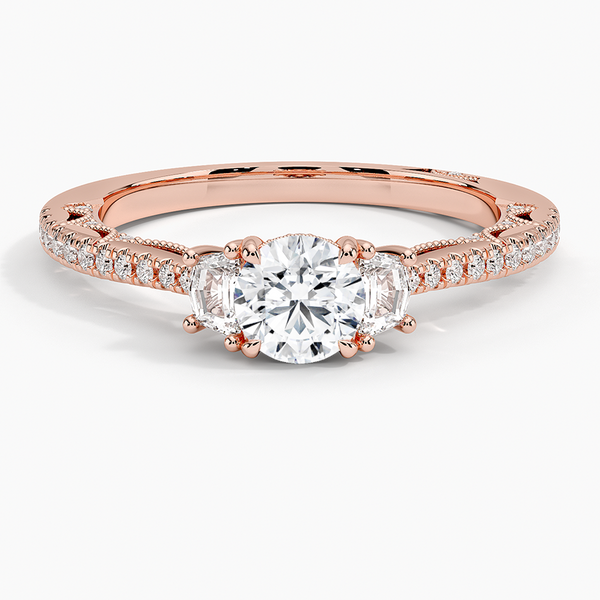
Tacori Lunetta Crescent Pavé Three Stone Diamond Engagement Ring
$8,886.00
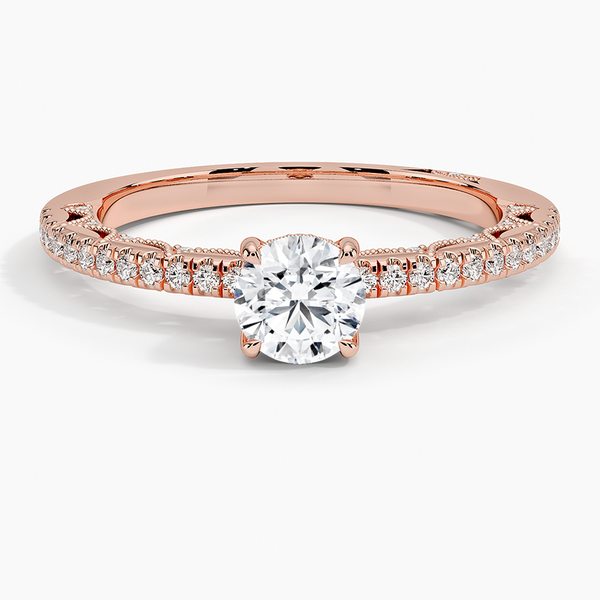
Tacori Lunetta Crescent Diamond Engagement Ring
$6,142.00
You might also like
Related collections and pages from President Jewellers
Designing your ring
Designed online. Made by hand.
The convenience of online design.
-
Visualise it
Detailed CADs from every angle, so you see exactly what we’ll cast.
-
Try before we cast
Free ring sizers and a silver or wax sample to confirm the fit and feel before casting.
-
Hand-finished in London
Cast and finished in our London workshop and ready in 7–14 working days.
-
Risk-free
Every stone certified. Free refunds within 30 days (21 working) — no questions asked.
Three steps to your ring
-
1
Choose your starting point
-
2
Pair the two
-
3
We craft & deliver
What our customers say
From your first question to your finished ring — our Hatton Garden specialists are here throughout. Crafted for your forever.
From your first question to your finished ring — our Hatton Garden specialists are here throughout. Crafted for your forever.
