Yellow Gold Engagement Rings
Yellow gold engagement rings are crafted in 9ct, 14ct and 18ct yellow gold at our Hatton Garden workshop, with every finished ring hallmarked at the London Assay Office. The warm, saturated hue of yellow gold has been the dominant choice for engagement rings across centuries, and it remains a considered, confident selection today. Each ring is made to order following a CAD design and silver or wax sample approval. Browse the yellow gold settings below to begin configuring your ring.
What makes yellow gold a distinctive choice for an engagement ring?
Yellow gold is an alloy of pure gold combined with silver and copper, and it is the closest in appearance to gold in its natural state. Unlike white or rose gold, its colour requires no rhodium plating or heavy alloy adjustment to achieve — the warm hue is inherent to the metal itself. In an engagement ring, yellow gold creates a pronounced contrast with colourless or near-colourless diamonds, making the stone appear to float against a warm frame. It pairs particularly well with warmer diamond grades — those in the G-to-K range on the GIA colour scale — since the metal's tone already introduces warmth, meaning a slight tint in the stone becomes imperceptible. Yellow gold also complements deeply saturated gemstones such as sapphires, rubies and emeralds, where the metal's richness reinforces rather than competes with the stone's colour.
Which carat of yellow gold is right for an engagement ring?
Yellow gold engagement rings are available in 9ct, 14ct and 18ct, each offering a different balance of purity, durability and depth of colour. 18ct yellow gold contains 75% pure gold and carries the most saturated, richest yellow tone — it is the most widely chosen carat for fine engagement rings and sits at the higher end of the price range. 14ct yellow gold, at 58.5% purity, is slightly harder and more resistant to everyday wear, while still carrying a strong yellow hue — a practical choice for those with active lifestyles. 9ct yellow gold, at 37.5% purity, is the most durable of the three and the most accessible in price, though its colour is noticeably paler. All three are hallmarked at the London Assay Office, and the choice between them has no bearing on the setting quality or design options available.
What does a yellow gold engagement ring cost in the UK?
The price of a yellow gold engagement ring is driven primarily by the centre stone, the carat of gold chosen, and the complexity of the setting. Bridebook's US average engagement ring spend of $6,000 provides a useful benchmark, though yellow gold settings can be configured well below or considerably above that figure depending on stone size and design. Choosing a 14ct or 9ct yellow gold band in place of 18ct reduces metal cost without altering the setting's visual impact significantly. The centre stone — whether a certified natural or lab-grown diamond, a coloured diamond, or a gemstone — typically accounts for the largest share of the total cost. A solitaire in yellow gold with a 0.5ct certified diamond sits at a different price point to a pavé-set yellow gold ring with a 1.25ct centre stone.
How long does a made-to-order yellow gold engagement ring take?
Every yellow gold engagement ring at President Jewellers is made to order. The process begins with a consultation and CAD design, followed by a silver or wax sample that can be reviewed at our Hatton Garden showroom by appointment — allowing the proportions and profile of the setting to be assessed before anything is cast in gold. Once the design is confirmed, the ring is cast, set, finished and polished before being hallmarked at the London Assay Office. From order confirmation, lead time is 7 to 14 business days depending on design complexity — a simple yellow gold solitaire sits at the faster end, while intricate pavé or bespoke designs take longer. Complimentary insured UK delivery is included, and every ring carries a lifetime warranty with free resizing for life.
How should a yellow gold engagement ring be cared for?
Yellow gold is well suited to daily wear, though like all fine metal it benefits from routine care. 18ct yellow gold, being softer than 9ct or 14ct, can develop a gentle patina over time — many wearers regard this as a natural characteristic of the metal rather than a flaw. Removing a yellow gold ring before heavy manual work, chlorinated swimming pools or prolonged contact with abrasive surfaces will preserve its polish. Cleaning at home with warm water and a soft cloth is sufficient for regular maintenance. Because yellow gold requires no rhodium plating — unlike white gold — there are no periodic refinishing costs to factor in, making it one of the lower-maintenance choices across the metal range.
Frequently asked questions
Are yellow gold engagement rings still popular in the UK?
Yellow gold has seen a sustained return to prominence in UK engagement ring choices over recent years, having been dominant for most of the twentieth century before white metals took precedence in the 1990s and 2000s. Its warm hue suits a wide range of skin tones and diamond grades, and its association with classic ring design has made it a considered choice for those drawn to understated, heritage-influenced settings.
Does yellow gold make a diamond look more yellow?
Yellow gold can introduce a slight warm reflection into a diamond, which is most noticeable in higher-colour stones where absolute colourlessness is the goal. For diamonds in the G-to-K colour range, this effect is minimal and often flattering rather than detrimental. If a D-to-F colourless diamond is the priority, a white metal setting such as platinum or white gold will better preserve that icy appearance.
What is the difference between 9ct, 14ct and 18ct yellow gold?
The carat refers to the proportion of pure gold in the alloy. 18ct contains 75% gold and has the richest yellow colour; 14ct contains 58.5% gold and is slightly harder and more scratch-resistant; 9ct contains 37.5% gold and is the most durable and most affordable, though its hue is noticeably paler. All three are fully hallmarked at the London Assay Office.
Can I set any gemstone or diamond shape in yellow gold?
Yes — yellow gold is compatible with all diamond shapes and centre stones. Round brilliant, oval, emerald cut, pear, and cushion shapes all sit naturally in yellow gold settings. Coloured gemstones such as sapphires, rubies and emeralds are particularly well suited to yellow gold, as the warmth of the metal tends to enrich rather than neutralise saturated colour.
Does a yellow gold ring need rhodium plating?
No. Rhodium plating is applied to white gold to produce a bright, white finish — it has no role in yellow gold rings. This means yellow gold requires no periodic replating, making it simpler to maintain over the long term. The surface can be re-polished by a jeweller if desired, but the colour itself remains consistent without any additional treatment.
Explore further
Featured yellow gold engagement rings
Hand-selected pieces from the President Jewellers catalogue
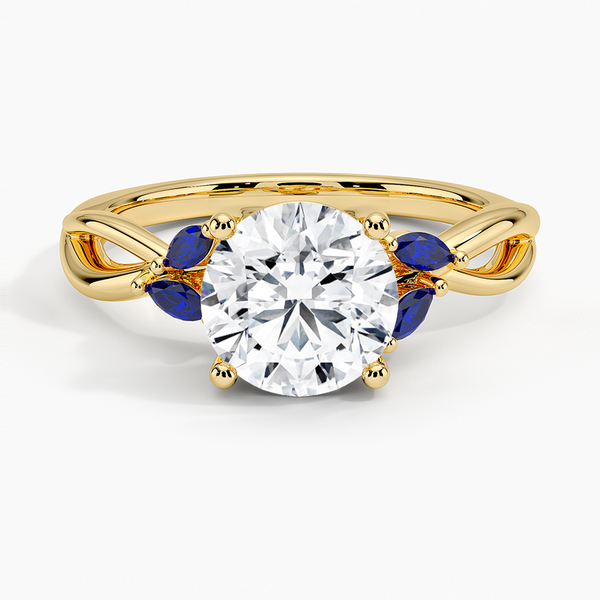
Willow Ring With Sapphire Accents Engagement Ring
$1,666.00
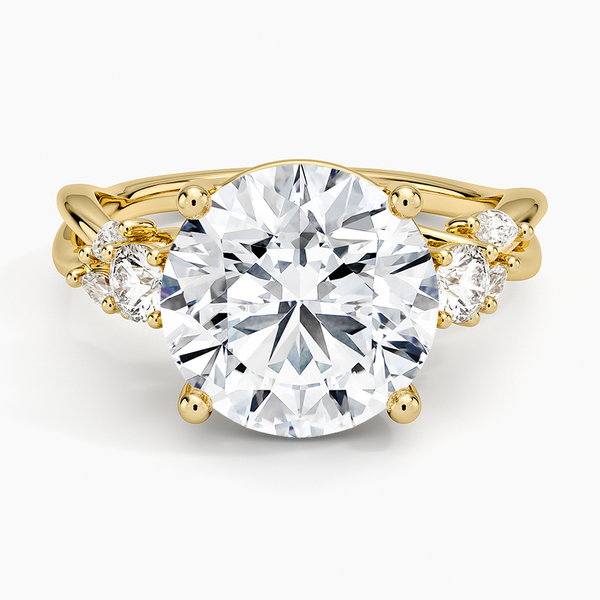
Willow Three Stone Diamond Engagement Ring
$2,149.00
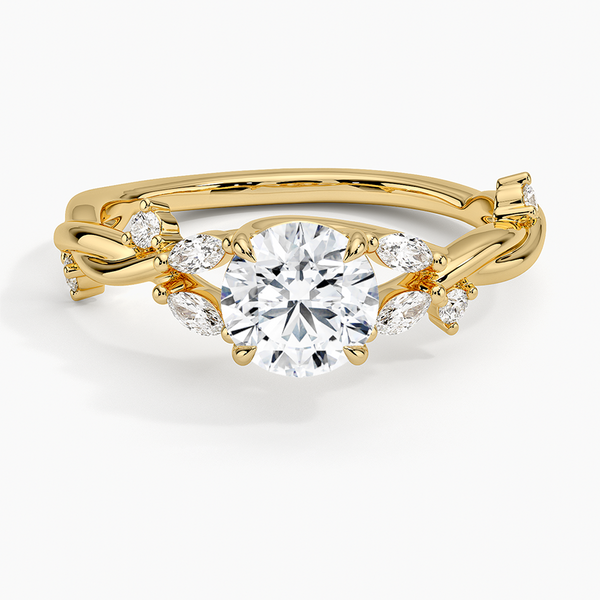
Azalea Twist Diamond Engagement Ring
$1,880.00
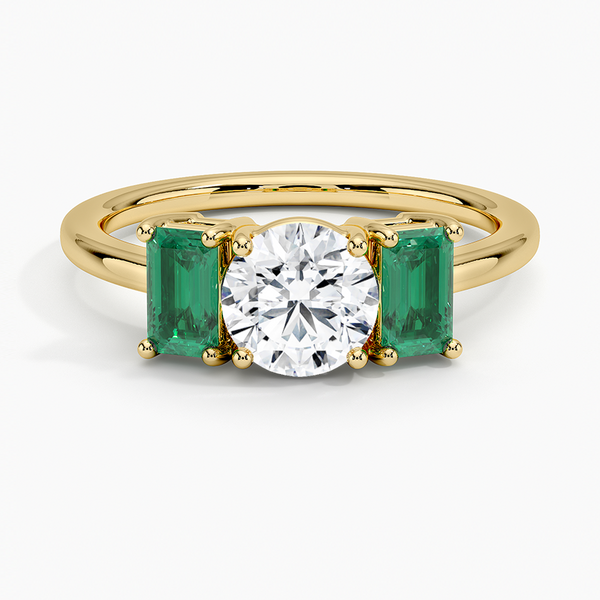
Luxe Rhiannon Three Stone Lab Emerald Engagement Ring
$2,327.00
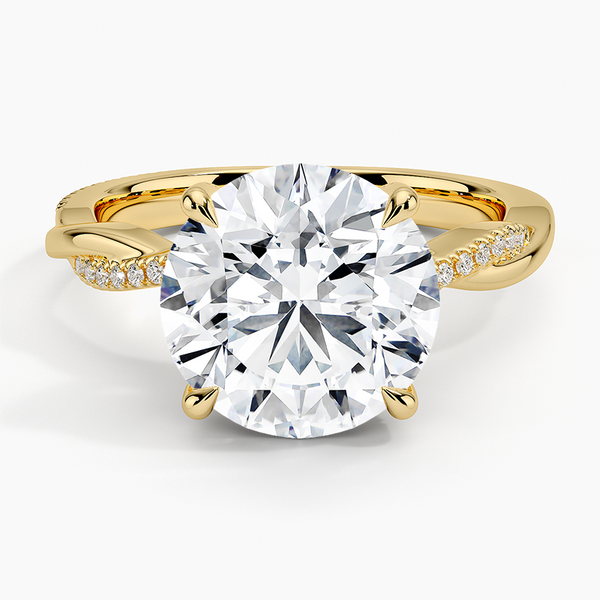
Petite Twisted Vine Hidden Halo Pavé Diamond Engagement Ring
$1,702.00
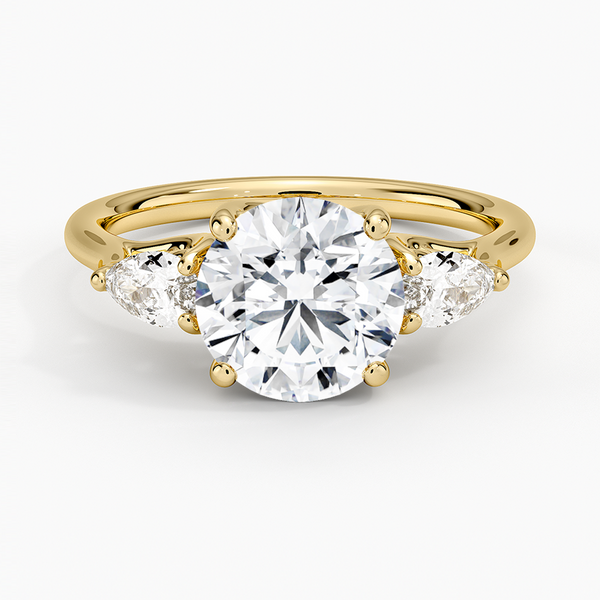
Trellis Three Stone Pear Diamond Engagement Ring
$3,096.00
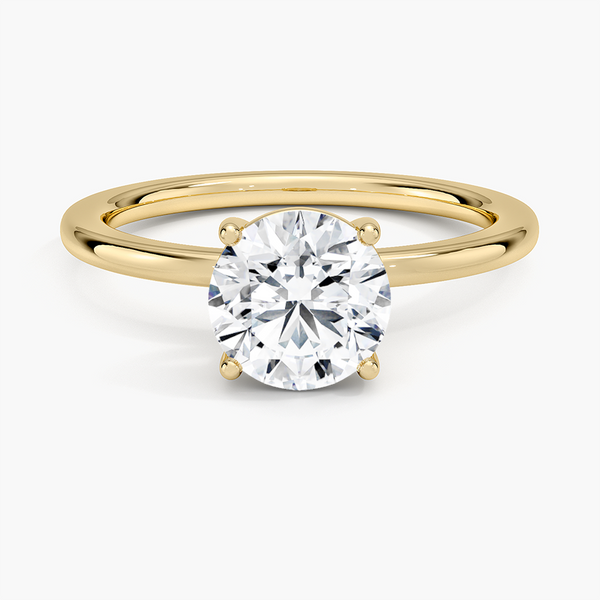
Solitaire Engagement Ring
$1,373.00
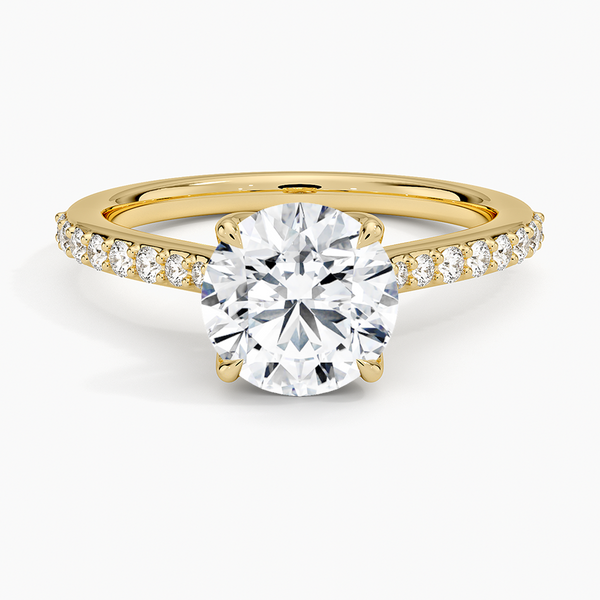
Elodie Cathedral Diamond Engagement Ring
$1,702.00
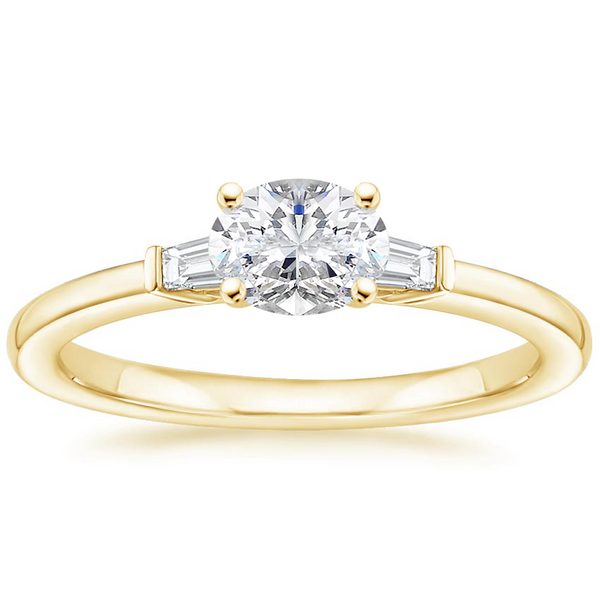
East West Tapered Baguette Diamond Engagement Ring
$1,577.00
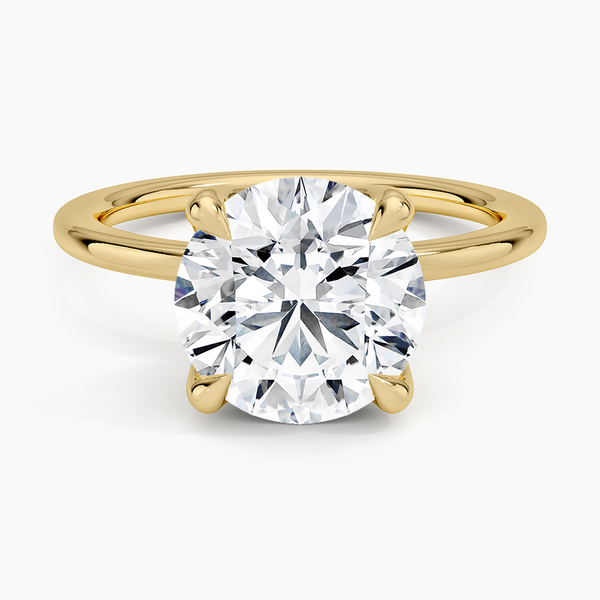
Petite Elodie Solitaire Engagement Ring
$1,714.00
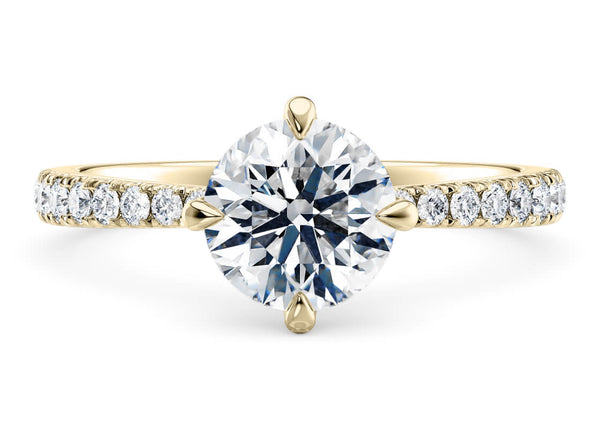
Asteria Compass Diamond Engagement Ring
$1,743.00
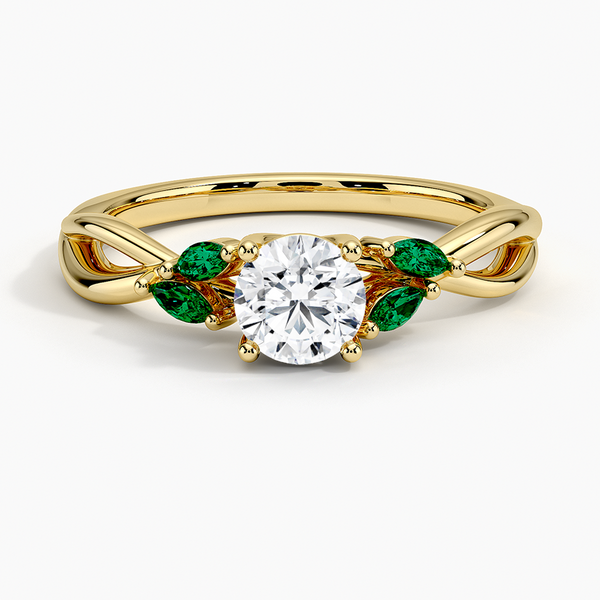
Willow Ring With Lab Emerald Accents Engagement Ring
$1,666.00
Designing your ring
Designed online. Made by hand.
The convenience of online design.
-
Visualise it
Detailed CADs from every angle, so you see exactly what we’ll cast.
-
Try before we cast
Free ring sizers and a silver or wax sample to confirm the fit and feel before casting.
-
Hand-finished in London
Cast and finished in our London workshop and ready in 7–14 working days.
-
Risk-free
Every stone certified. Free refunds within 30 days (21 working) — no questions asked.
Three steps to your ring
-
1
Choose your starting point
-
2
Pair the two
-
3
We craft & deliver
