White Gold Engagement Rings
White gold engagement rings combine the cool, bright finish of platinum's aesthetic with the workability and range of gold alloys, offered at President Jewellers in 9ct, 14ct and 18ct. Every ring is crafted in our Hatton Garden workshop, hallmarked at the London Assay Office, and set with certified diamonds or a centre stone of your choice. Browse the white gold settings below to configure a ring built precisely to your specification.
What is white gold and how is it made?
White gold is an alloy of pure yellow gold mixed with white metals — typically palladium or nickel — then finished with a rhodium plating that gives the surface its characteristic bright, cool-white sheen. The gold content determines the karat: 18ct white gold is 75% pure gold, 14ct is 58.3%, and 9ct is 37.5%, with the remaining percentage made up of the whitening alloys. The rhodium finish is what makes white gold visually similar to platinum at a glance, though the two metals differ meaningfully in density and long-term wear. In a white gold engagement ring, the alloy provides a firm, workable base for delicate setting work — claw settings, pavé rails, and milgrain edges all hold their detail well in 18ct white gold. Over years of daily wear, rhodium plating gradually thins and can be reapplied by a jeweller, which is worth factoring into long-term care.
Which karat of white gold suits an engagement ring best?
For white gold engagement rings worn daily, 18ct strikes the most considered balance between gold purity, hardness, and the durability of the rhodium surface. At 75% gold content, 18ct white gold is dense enough to hold fine claw settings securely while remaining slightly softer than 9ct alloys, which paradoxically makes it less prone to stress fractures in intricate designs. 14ct white gold offers a harder alloy — preferred where a setting carries many small accent stones or fine pavé work — while 9ct is well suited to rings worn more occasionally or to those working within a tighter budget without sacrificing a hallmarked, London Assay Office-certified piece. All three karats are available across our white gold engagement ring range, and our Hatton Garden team will recommend the most appropriate specification during the initial consultation based on design complexity and lifestyle.
What does a white gold engagement ring cost in the UK?
The cost of a white gold engagement ring depends on the karat chosen, the design complexity, and the centre stone. Bridebook's US average engagement ring spend of $6,000 serves as a useful benchmark, though a simple white gold solitaire set with a well-proportioned 0.5ct certified diamond will typically sit at or below this figure, while a pavé-set or multi-stone design in 18ct white gold with a 1.0ct or larger stone will comfortably exceed it. White gold itself is priced by gold weight and karat, meaning the metal cost per ring is lower than an equivalent platinum piece — the difference in metal premium can be redirected toward a larger or better-graded centre stone if that is the priority. Lab-grown diamonds offer a further route to maximising specification within a set budget, certified to the same standards as natural stones by GIA, HRD or IGI.
How long does a made-to-order white gold engagement ring take?
A bespoke white gold engagement ring at President Jewellers follows a defined process: consultation, CAD design, silver or wax sample for a try-on at our Hatton Garden showroom, casting in the chosen white gold karat, setting, finishing, polishing, and London Assay Office hallmarking. The full process takes 7 to 14 business days from order confirmation — simpler solitaire designs in white gold complete toward the faster end, while intricate pavé or multi-stone settings sit at the longer end. The wax or silver sample stage is particularly valuable for white gold rings: because rhodium plating and setting geometry both affect the final visual weight, handling a physical sample before the ring is cast in gold gives a far more accurate impression than renders alone. Insured UK delivery is complimentary, with free resizing for life included on every ring.
How to care for a white gold engagement ring
White gold engagement rings require modest but consistent care to maintain their rhodium-plated finish. The plating is applied in a very thin layer — typically 0.5 to 1 micron — and will gradually wear through with daily contact, exposing the slightly warmer, slightly yellowish tone of the underlying gold alloy beneath. Replating is a straightforward workshop procedure and is recommended every one to three years depending on wear frequency. Day-to-day, removing a white gold ring during heavy manual work, contact with harsh cleaning chemicals, or high-chlorine environments will meaningfully extend the life of the rhodium surface. Ultrasonic cleaning is generally safe for white gold rings set with diamonds, but should be avoided with certain softer gemstones. A soft cloth and warm soapy water remains the most dependable routine cleaning method for a white gold engagement ring worn every day.
Frequently asked questions
Is white gold a good choice for an engagement ring in the UK?
White gold is one of the most widely chosen metals for engagement rings in the UK. Its bright, cool-white finish complements most diamond grades and shapes, it is available in 9ct, 14ct and 18ct, and it typically costs less than an equivalent platinum ring. The main maintenance consideration is periodic rhodium replating, which keeps the surface at its brightest.
What is the difference between white gold and platinum for an engagement ring?
Platinum is a naturally white, denser, and heavier metal than white gold. It does not require rhodium plating and develops a patina rather than wearing through. White gold is lighter, lower in cost, and its rhodium finish can be renewed. Platinum is harder-wearing over decades; white gold offers more flexibility in karat and price point.
Does white gold turn yellow over time?
The underlying gold alloy in white gold has a slightly warm tone, which becomes visible as the rhodium plating gradually wears away with daily use. This is normal and does not indicate a fault. A jeweller can replate the ring with a fresh rhodium layer, restoring the bright white surface, typically within a short workshop visit.
Can I set any diamond shape in a white gold engagement ring?
White gold accommodates all diamond shapes — round brilliant, oval, emerald cut, cushion, pear, and marquise among them. The metal's workability in 18ct or 14ct makes it well suited to both simple four-claw solitaires and more elaborate halo or pavé settings. The cool white tone of rhodium-plated white gold pairs especially well with higher-colour diamonds in the D-to-H range.
Are white gold engagement rings at President Jewellers hallmarked?
Every white gold engagement ring finished in our Hatton Garden workshop is hallmarked at the London Assay Office before dispatch. The hallmark confirms the karat — 9ct, 14ct or 18ct — and provides independent verification of the metal's purity. All rings carry a lifetime warranty and are delivered with complimentary insured UK shipping.
Explore further
Featured white gold engagement rings
Hand-selected pieces from the President Jewellers catalogue

Willow Ring With Sapphire Accents Engagement Ring
$1,678.00

Willow Three Stone Diamond Engagement Ring
$2,165.00
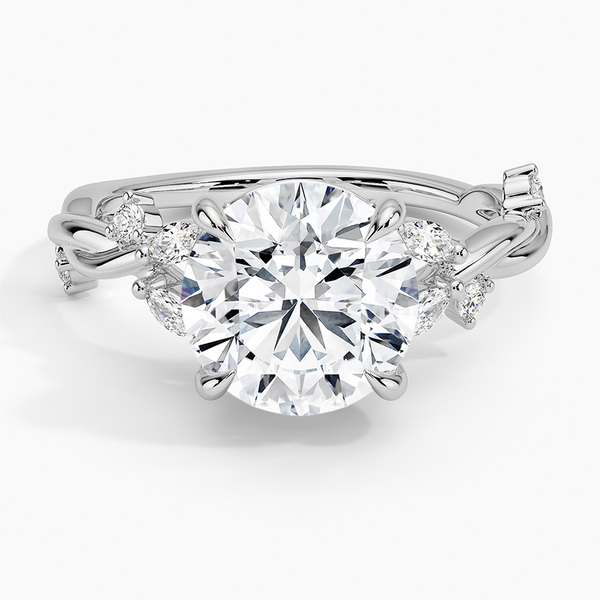
Azalea Twist Diamond Engagement Ring
$1,895.00
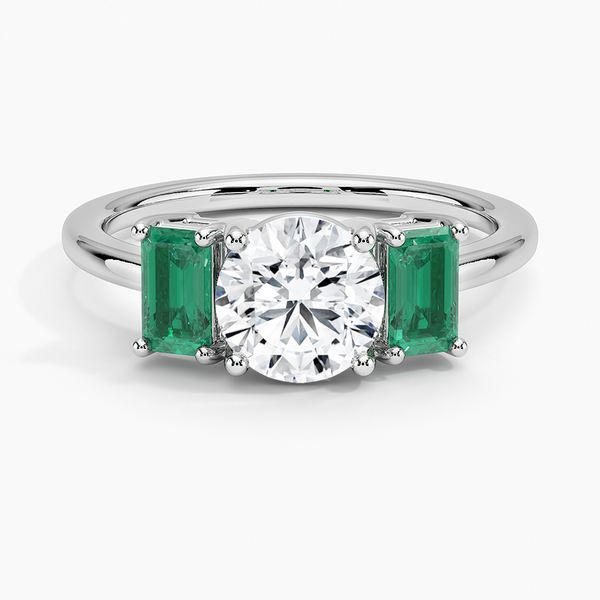
Luxe Rhiannon Three Stone Lab Emerald Engagement Ring
$2,345.00
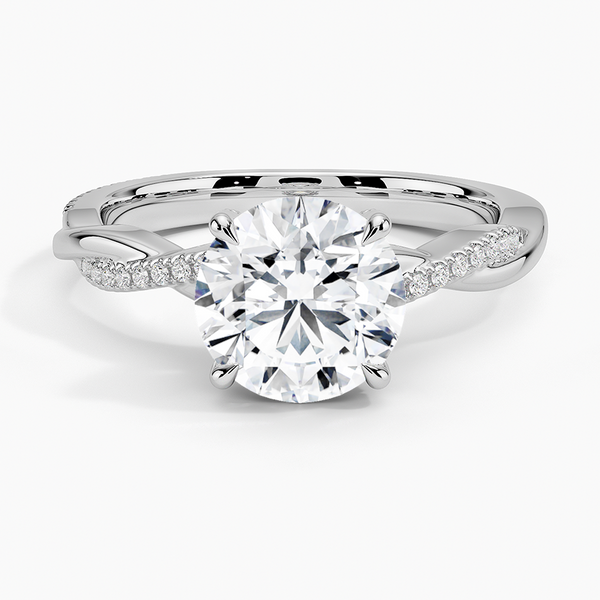
Petite Twisted Vine Hidden Halo Pavé Diamond Engagement Ring
$1,714.00

Trellis Three Stone Pear Diamond Engagement Ring
$3,119.00
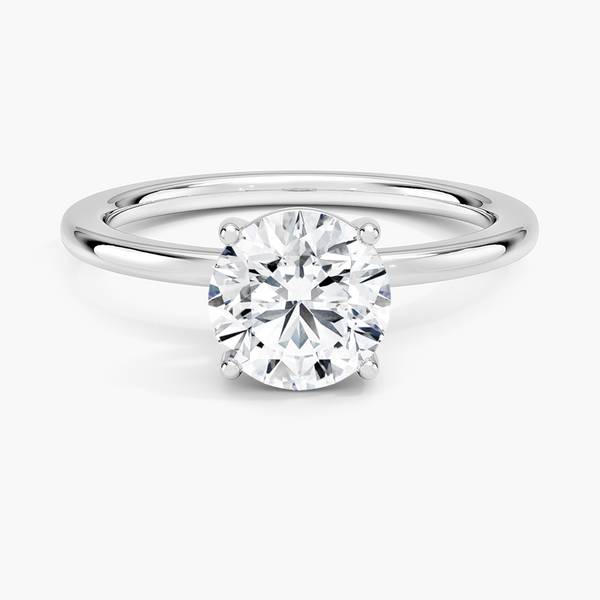
Solitaire Engagement Ring
$1,383.00
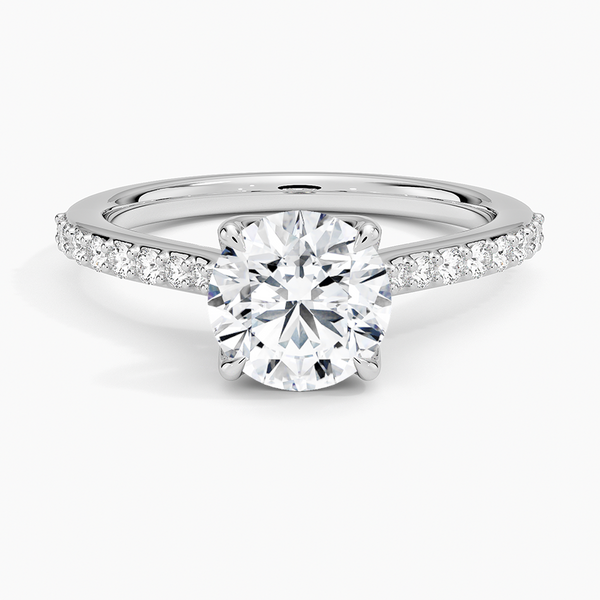
Elodie Cathedral Diamond Engagement Ring
$1,714.00

East West Tapered Baguette Diamond Engagement Ring
$1,588.00

Petite Elodie Solitaire Engagement Ring
$1,727.00
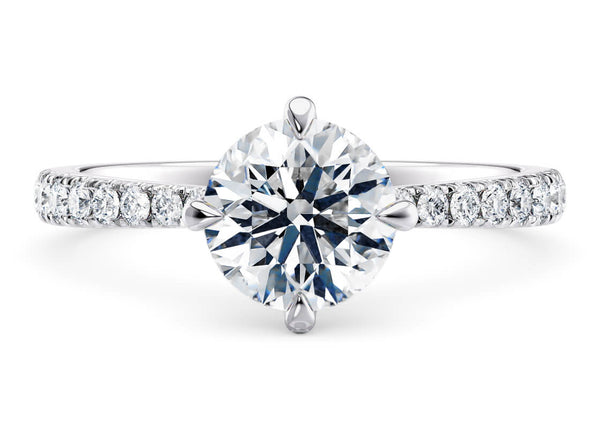
Asteria Compass Diamond Engagement Ring
$1,850.00
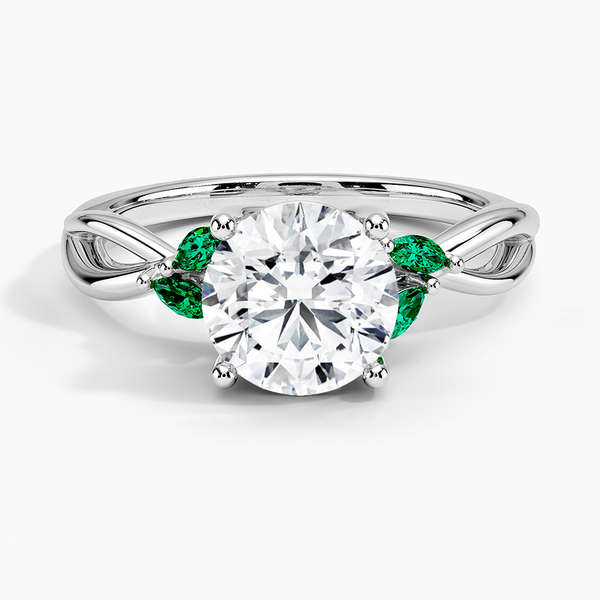
Willow Ring With Lab Emerald Accents Engagement Ring
$1,678.00
Designing your ring
Designed online. Made by hand.
The convenience of online design.
-
Visualise it
Detailed CADs from every angle, so you see exactly what we’ll cast.
-
Try before we cast
Free ring sizers and a silver or wax sample to confirm the fit and feel before casting.
-
Hand-finished in London
Cast and finished in our London workshop and ready in 7–14 working days.
-
Risk-free
Every stone certified. Free refunds within 30 days (21 working) — no questions asked.
Three steps to your ring
-
1
Choose your starting point
-
2
Pair the two
-
3
We craft & deliver
