Green Lab Grown Fancy Diamonds
What is a green lab grown fancy diamond?
A green lab grown fancy diamond is a real diamond — chemically, optically and physically identical to its mined counterpart — produced in a laboratory rather than extracted from the earth. The green colour arises during growth through trace nitrogen or through post-growth irradiation treatment, mirroring the same processes that occur naturally deep underground over millions of years. Lab-grown green diamonds are graded using the same GIA, HRD or IGI colour-intensity scale applied to natural stones: Faint, Very Light, Light, Fancy, Fancy Intense, and Fancy Vivid. Fancy Vivid green sits at the highest intensity level and commands the greatest price premium. Because the colour is introduced during a controlled growth process, lab-grown production can yield greens at greater frequency than natural mining — which is precisely why the format is attractive for buyers who want a meaningful green hue without the scarcity-driven cost of a natural equivalent.
How does lab growth produce a green diamond colour?
The green colour in a lab grown diamond is achieved primarily through two routes. In HPHT (high pressure, high temperature) growth, trace elements introduced during crystal formation can produce a subtle green body colour. More commonly, CVD (chemical vapour deposition) grown diamonds undergo controlled irradiation after growth — exposing the crystal lattice to electron or gamma radiation, which displaces carbon atoms and creates colour centres that absorb red and blue wavelengths, leaving green visible to the eye. This is the same physical mechanism responsible for naturally green diamonds, many of which acquired their colour from uranium-bearing rocks over geological timescales. Post-irradiation annealing can shift a green lab diamond toward yellow-green or blue-green depending on temperature, allowing precise colour targeting. GIA, HRD and IGI grading reports note the colour origin where detectable, and every green lab grown diamond in our inventory arrives with a certificate from one of these three laboratories.
What does a green lab grown diamond cost in the UK?
Green lab grown fancy diamonds are priced according to the four Cs — colour intensity, clarity, carat weight and cut — with colour intensity carrying the most significant weight. A Fancy-grade green lab grown diamond will sit at a meaningful price premium over a colourless lab stone of the same carat weight, while a Fancy Vivid green commands considerably more. Compared with natural green diamonds of equivalent intensity, the lab-grown equivalent is substantially more accessible, reflecting the reduced supply constraints. For buyers planning to set the stone into a ring, Bridebook's US average engagement ring spend of $6,000 provides a useful reference point, though green fancy diamond rings frequently sit above that figure once the colour premium is factored in. All green lab grown diamonds are available loose or set into one of our rings, with complimentary insured UK delivery on every order.
How to choose the right setting and metal for a green lab grown diamond
The choice of setting and metal has a direct effect on how the green of a lab grown fancy diamond reads to the eye. Yellow gold — available in 9ct, 14ct and 18ct — warms the green toward an olive or forest tone, which suits Fancy Intense or Fancy Vivid stones that can hold their own against the metal's body colour. White gold or platinum provides a neutral surround that allows a lighter Fancy or Fancy Light green to read more clearly without competition from the setting. Rose gold draws out any yellow-green or chartreuse undertone and suits buyers who want a warmer, less conventional presentation. For the setting style itself, a bezel or rub-over setting wraps the girdle in metal, which can deepen the apparent saturation by reflecting the metal's colour into the pavilion. A four- or six-claw solitaire maximises light return and keeps the green transparent and clean. When set into one of our rings, the full process applies: CAD design, a silver or wax sample try-on at Hatton Garden, casting, setting, finishing and London Assay Office hallmarking, with a lead time of 7–14 business days.
Caring for a green lab grown diamond ring
Green lab grown fancy diamonds share the same physical properties as all diamonds — a Mohs hardness of 10 and exceptional resistance to scratching. The colour, however, merits one important consideration: if the green was introduced through irradiation, prolonged exposure to very high heat (for example, a jeweller's torch during resizing or repair) can alter or fade the colour. This applies equally to natural irradiated green diamonds. Our rings carry a lifetime warranty and free-for-life resizing, and any work carried out in our Hatton Garden workshop accounts for this sensitivity. For daily care, clean the green lab grown diamond ring with warm water and a soft brush, avoiding ultrasonic cleaners if the stone is set in a claw or pavé setting where prongs could loosen over time. Store separately from other jewellery to prevent contact abrasion.
Frequently asked questions
Are green lab grown diamonds real diamonds?
Yes. Green lab grown diamonds are chemically, physically and optically identical to mined diamonds — pure carbon in a cubic crystal structure, with the same hardness of 10 on the Mohs scale. The only difference is origin. Every green lab grown diamond in our inventory is certified by GIA, HRD or IGI, confirming its diamond status and grading its colour intensity.
Is the green colour in a lab grown diamond permanent?
In most cases, yes — under normal wearing conditions. The colour is stable at everyday temperatures. The one caveat is prolonged exposure to extreme heat, such as a jeweller's torch, which can affect irradiation-induced colour. Any resizing or repair carried out at our Hatton Garden workshop accounts for this, and our lifetime warranty covers the ring throughout its life.
How is a green lab grown diamond graded?
Green lab grown fancy diamonds are graded on the same GIA, HRD or IGI colour-intensity scale used for natural fancy colour diamonds: Faint, Very Light, Light, Fancy, Fancy Intense, and Fancy Vivid. Fancy Vivid represents the strongest saturation. The certificate also notes cut, clarity, carat weight and, where detectable, the colour origin.
Can I buy a green lab grown diamond loose and have it set later?
All green lab grown diamonds are available loose or set into one of our rings. If purchased loose, returns are accepted within 30 days, no questions asked, with no exclusions. If set into a ring, the standard ring process applies — CAD design, sample try-on and a 7–14 working day lead time — and the ring carries our lifetime warranty and free-for-life resizing.
How does a green lab grown diamond compare to a natural green diamond in price?
Natural green diamonds are among the rarest of all fancy colours, making them extremely high in cost per carat. Lab-grown green diamonds offer the same colour range at a substantially lower price, as the supply is not constrained by geological rarity. Colour intensity remains the dominant price driver in both categories, with Fancy Vivid stones commanding the highest premiums regardless of origin.
Featured green lab grown fancy diamonds
Hand-selected pieces from the President Jewellers catalogue
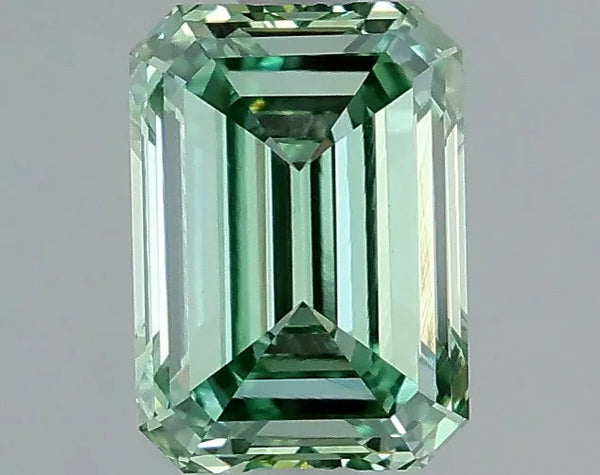
1.33ct Emerald Lab Grown Diamond (Colour Fancy Vivid Green, Clarity VVS2, IGI Certified)
$639.00
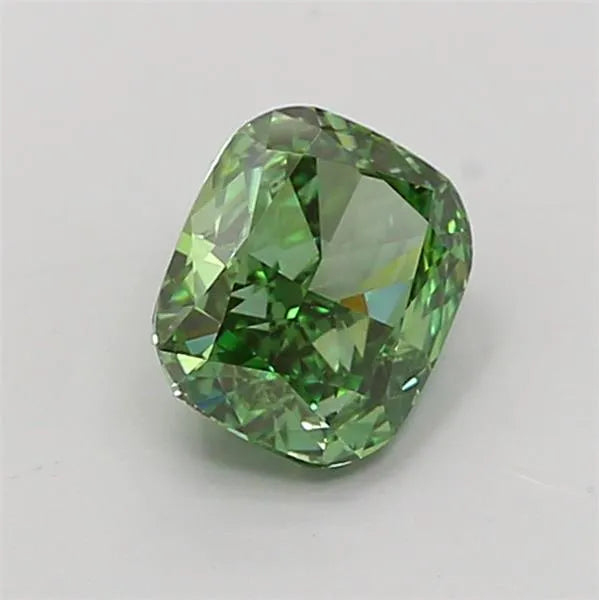
1.41ct Cushion modified Lab Grown Diamond (Colour Fancy Vivid Green, Clarity VS1, IGI Certified)
$335.00
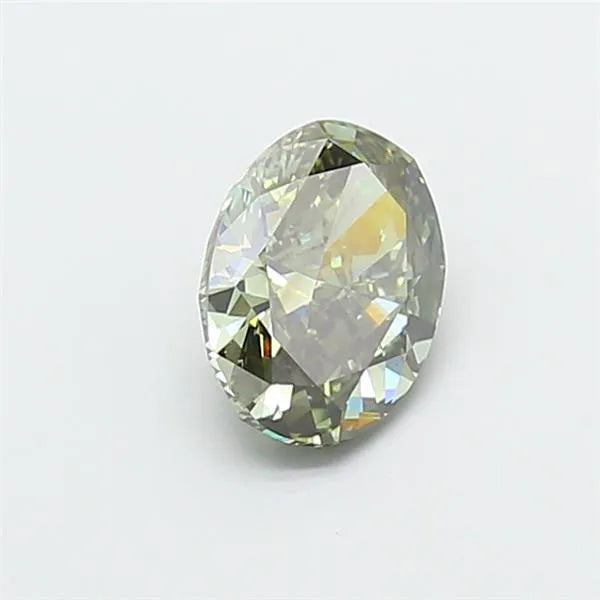
1.50ct Oval Lab Grown Diamond (Colour Fancy Vivid Green, Clarity VS2, IGI Certified)
$389.00

3.01ct Marquise Lab Grown Diamond (Colour Fancy Deep Green, Clarity SI2, IGI Certified)
$622.00
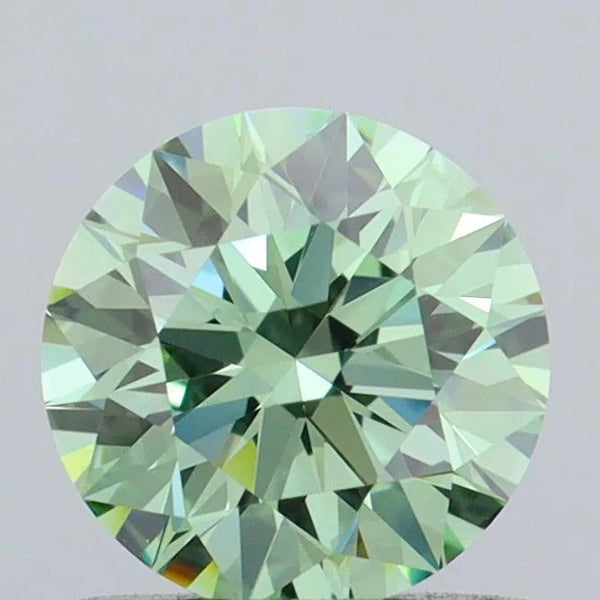
0.81ct Round Lab Grown Diamond (Colour Fancy Vivid Green, Clarity VVS1, Cut ID, IGI Certified)
$410.00

1.10ct Emerald Lab Grown Diamond (Colour Fancy Vivid Green, Clarity IF, IGI Certified)
$781.00

1.08ct Cushion modified Lab Grown Diamond (Colour Fancy Vivid Green, Clarity VS1, IGI Certified)
$410.00
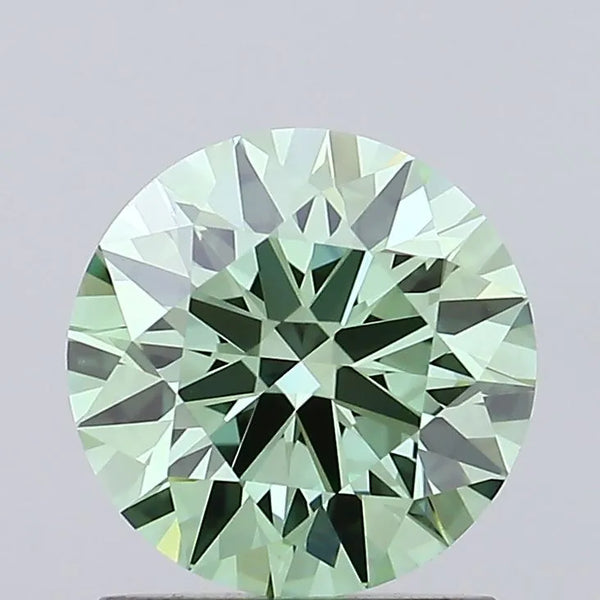
1.24ct Round Lab Grown Diamond (Colour Fancy Vivid Green, Clarity IF, Cut ID, IGI Certified)
$639.00
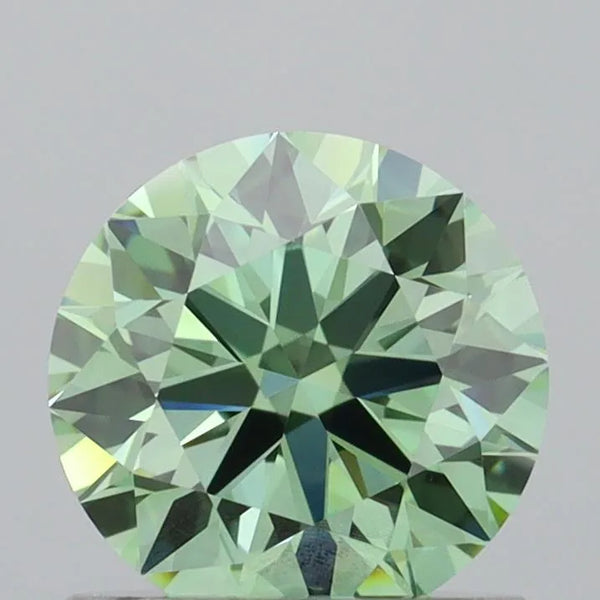
1.04ct Round Lab Grown Diamond (Colour Fancy Vivid Green, Clarity FL, Cut ID, IGI Certified)
$581.00
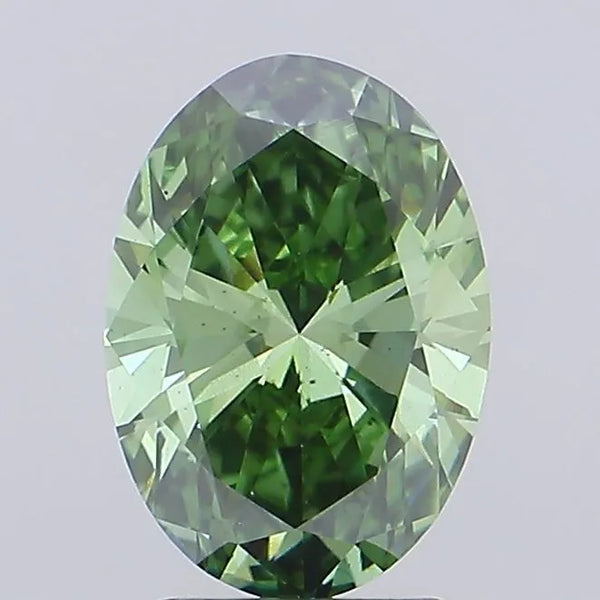
2.59ct Oval Lab Grown Diamond (Colour Fancy Vivid Green, Clarity VS2, IGI Certified)
$669.00
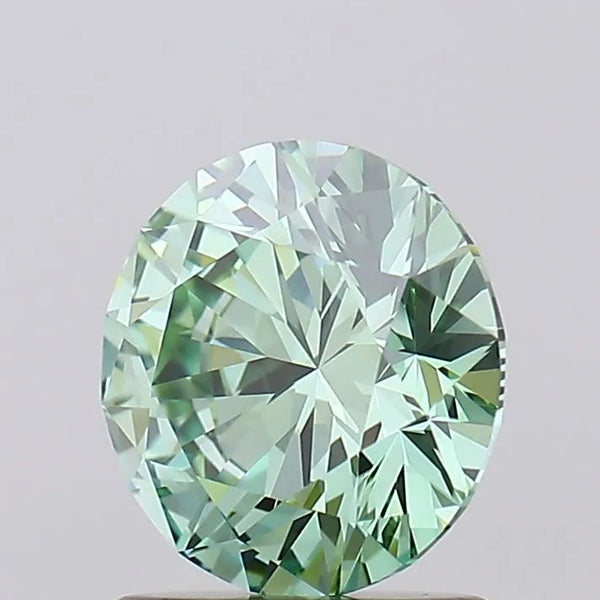
1.34ct Round Lab Grown Diamond (Colour Fancy Vivid Green, Clarity FL, Cut ID, IGI Certified)
$1,005.00
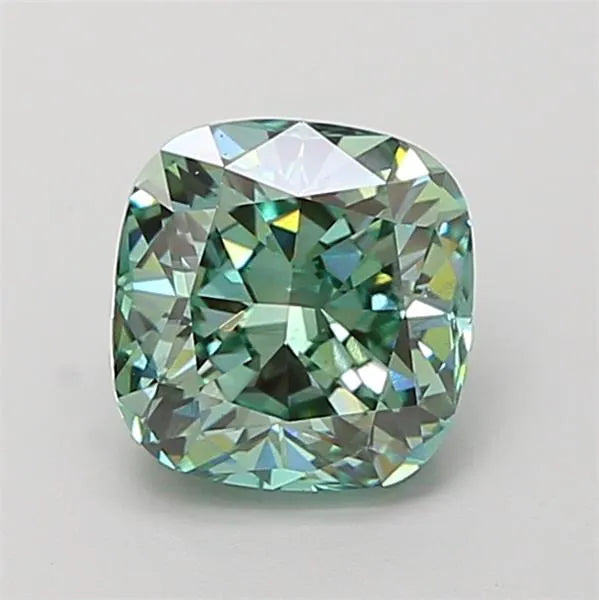
1.52ct Cushion modified Lab Grown Diamond (Colour Fancy Vivid Green, Clarity VS2, IGI Certified)
$399.00
Loose & certified
Looking to pair it with a ring?
Every diamond on this page is loose — buy it on its own, set it into a ring of your own design, or pair it with one of our settings. Open any stone, click Set in a ring, and we’ll take you to your engagement, eternity or wedding band options.
Already have a setting in mind? Tap the menu icon and choose Engagement Rings › Ring Builder.
