Pear Natural Diamonds
What defines a pear natural diamond?
A pear natural diamond — sometimes called a teardrop cut — is a hybrid brilliant, combining the rounded girdle of a round brilliant with the pointed apex of a marquise. The result is a shape that carries between 56 and 58 facets arranged to maximise light return across an asymmetric outline. The pear cut emerged in the mid-fifteenth century, attributed to Flemish polisher Lodewyk van Berquem, who first demonstrated how a pointed terminus could be maintained without sacrificing structural integrity. Natural pear diamonds are cut from rough that has already formed over billions of years within the earth's mantle, and no two stones emerge from that process with identical inclusions, proportions, or trace-element profiles. It is this geological individuality — combined with the cut's architectural tension between curve and point — that draws collectors and ring buyers to the natural pear above alternative origins.
How to choose a well-proportioned pear natural diamond
The most important proportion to assess in a pear natural diamond is the length-to-width ratio. A ratio between 1.45:1 and 1.75:1 produces the most balanced silhouette; stones below 1.45:1 read as wide and squat, while those above 1.75:1 appear narrow and fragile at the point. Alongside ratio, look for shoulders that curve symmetrically, a point that sits precisely on the axis of symmetry, and wings — the upper curved quarters — that are neither too flat nor too bulbous. The 'bow-tie effect', a dark shadow across the centre of the stone common to elongated brilliant cuts, is less pronounced in well-cut pear natural diamonds where the pavilion facets are angled to redirect light away from the viewer's shadow. Each stone in our collection is certified by GIA, HRD or IGI, with grading reports that confirm cut, colour, clarity and carat weight, giving objective data to compare alongside your own visual assessment.
What does a pear natural diamond cost in the UK?
Pear natural diamonds are priced primarily by carat weight, colour, and clarity, but the cut quality and length-to-width ratio also influence per-carat value. Because the pear shape retains more of the rough crystal than a round brilliant — cutters sacrifice less material to achieve the outline — pear naturals can offer a larger face-up footprint per carat than equivalent round stones, which means the same budget can yield a visibly larger diamond. Bridebook's US average engagement ring spend of $6,000 gives a useful reference point for total ring budgets; setting a pear natural diamond in a simpler band keeps the majority of that budget directed toward the stone itself. Colour grades in the G–I range face up well in pear natural diamonds due to the cut's scattering brilliance, and clarity grades of VS2 or SI1 are often eye-clean in this shape, both of which help manage cost without compromising face-up appearance.
How are pear natural diamonds sourced and certified?
Every pear natural diamond offered here is sourced through ethical-mine partner suppliers who operate under internationally recognised responsible-sourcing frameworks. Natural diamonds form between one and three billion years ago and are recovered through established mining operations — their geological age and earth-origin are verifiable facts reflected in trace-element chemistry that no laboratory-grown stone can replicate. Each pear natural diamond in our collection carries a grading certificate from GIA, HRD or IGI, the three most respected independent gemological laboratories, confirming the four Cs assessed by trained graders under controlled conditions. When a loose pear natural diamond is purchased and then set into one of our rings, the finished piece is submitted to the London Assay Office for hallmarking, and insured for complimentary UK delivery.
Wearing and setting a pear natural diamond
The pointed apex of a pear natural diamond is its most vulnerable feature. When the stone is worn loose in a ring setting, a claw or bezel that covers the point is essential to prevent chipping — a V-claw or dedicated point claw is the standard protective solution. The pear's elongated shape creates a visual lengthening effect on shorter fingers, while on longer fingers a wider stone or lower length-to-width ratio balances the proportions. The shape suits solitaire settings where the teardrop outline is uninterrupted, as well as halo configurations where the surrounding stones echo the pear's curve. When purchased loose, pear natural diamonds are covered by a 30-day return window with no questions asked and no exclusions. Once set into a ring through our Hatton Garden workshop, the piece benefits from a lifetime warranty and free resizing for life.
Frequently asked questions
Are pear natural diamonds more affordable than round naturals?
Pear natural diamonds typically command a lower per-carat price than round brilliants of equivalent colour and clarity grades. This is partly because the market for rounds remains the highest-demand shape, and partly because the pear cut retains more of the rough, reducing wastage. The result is that a pear natural diamond can appear visibly larger face-up than a round stone of the same carat weight.
What length-to-width ratio should I look for in a pear diamond?
A length-to-width ratio of 1.45:1 to 1.75:1 is broadly considered the most balanced for a pear natural diamond. Below 1.45:1 the stone reads as wide; above 1.75:1 the outline becomes elongated and the point more fragile. The ideal ratio is partly personal — a longer ratio suits some finger shapes better than others — so reviewing certified stone images or visiting our Hatton Garden showroom to see stones in person is advisable.
Does a pear natural diamond show a bow-tie shadow?
A bow-tie effect — a dark, butterfly-shaped shadow across the centre — can appear in elongated brilliant cuts including pear natural diamonds. Its severity depends on pavilion facet angles. A well-cut pear natural diamond minimises the bow-tie by redirecting light through the stone rather than back toward the viewer's own shadow. Reviewing the stone in multiple lighting conditions, or examining video footage provided with the certificate, helps assess severity before purchase.
How should the point of a pear diamond be protected in a setting?
The apex of a pear natural diamond should always be covered by a dedicated claw — typically a V-claw or wrap claw — to shield the point from impact. Without this protection, the thin terminus is vulnerable to chipping under everyday contact. When setting a loose pear natural diamond into one of our rings, our Hatton Garden workshop designs the claw configuration as part of the CAD process before casting.
Can I return a pear natural diamond if it is not right for me?
Loose pear natural diamonds are returnable within 30 days of delivery, with no questions asked and no exclusions. Once a stone has been set into a ring, the standard ring return policy applies — 30 days, with custom and bespoke orders excluded. Complimentary insured UK delivery is included with every order, in both directions if a return is initiated within the window.
How much does a 1 carat pear natural diamond cost in the UK?
A 1 carat pear natural diamond in the US typically ranges from around $3,300 to $8,600 depending on colour, clarity, cut and length-to-width ratio. Pear cuts retain more of the rough crystal than rounds, so they offer slightly better value per carat. A 1ct pear at G colour, VS clarity with a balanced 1.50-1.65 ratio commonly sits in the $4,650 to $6,600 band with GIA, IGI or HRD certification. D-F colour, VVS clarity stones extend above $9,250. Bow-tie severity affects price meaningfully — request a video of the actual stone before purchase, as a strong bow-tie can dull an otherwise high-spec stone.
Which direction should a pear diamond face on the finger?
Both directions are valid. Traditional convention orients the point toward the fingernail, which elongates the look of the finger; some wearers prefer point toward the knuckle. The setting is symmetrical either way once the stone is mounted, so the choice is purely aesthetic. The point must be protected by a V-claw or wrap claw regardless of orientation — the thin terminus is the most impact-vulnerable part of a pear natural diamond.
Featured pear natural diamonds
Hand-selected pieces from the President Jewellers catalogue
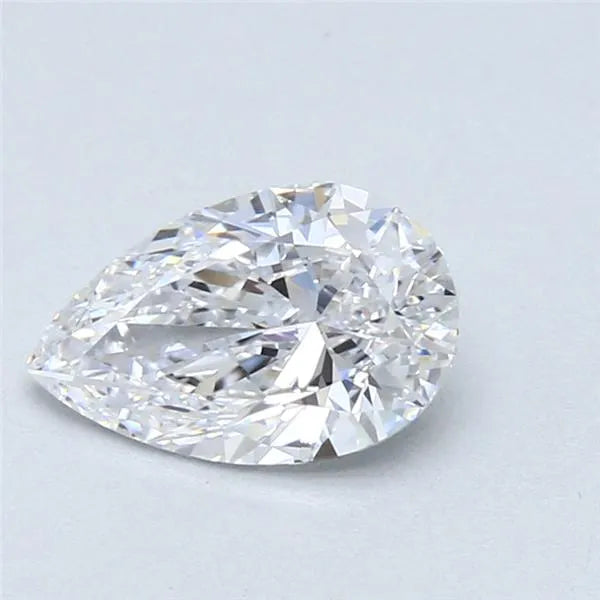
1.01ct Pear Natural Diamond (Colour D, Clarity FL, GIA Certified)
$10,413.00
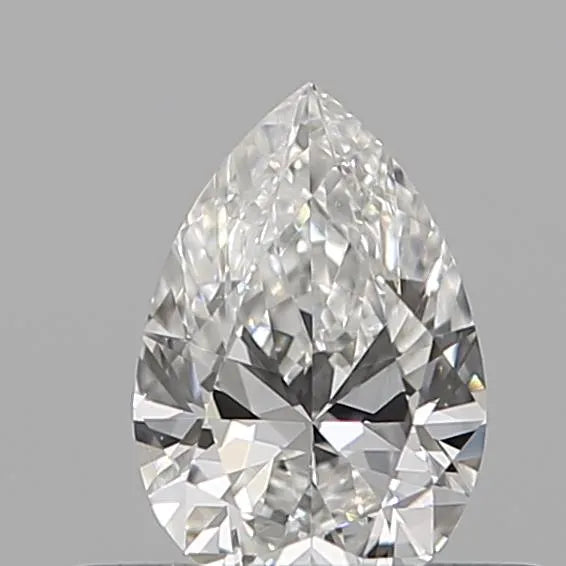
0.10ct Pear Natural Diamond (Colour E, Clarity SI1, Cut VG, IGI Certified)
$110.00
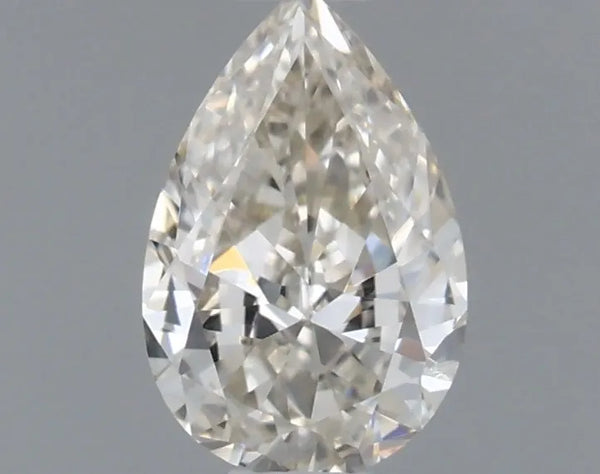
0.18ct Pear Natural Diamond (Colour I, Clarity VVS2, Cut GD, IGI Certified)
$264.00
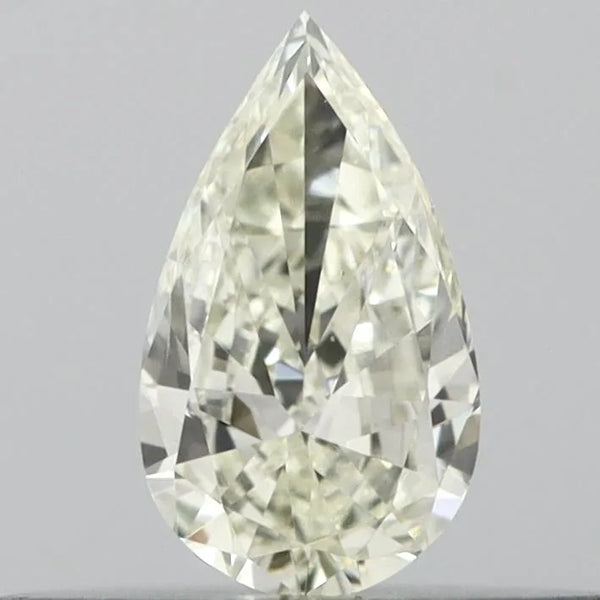
0.19ct Pear Natural Diamond (Colour H, Clarity SI1, Cut VG, IGI Certified)
$260.00
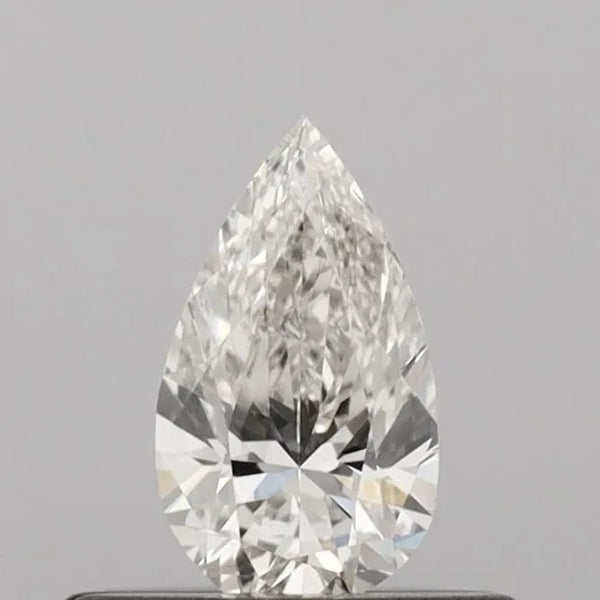
0.30ct Pear Natural Diamond (Colour H, Clarity VS2, Cut VG, IGI Certified)
$321.00
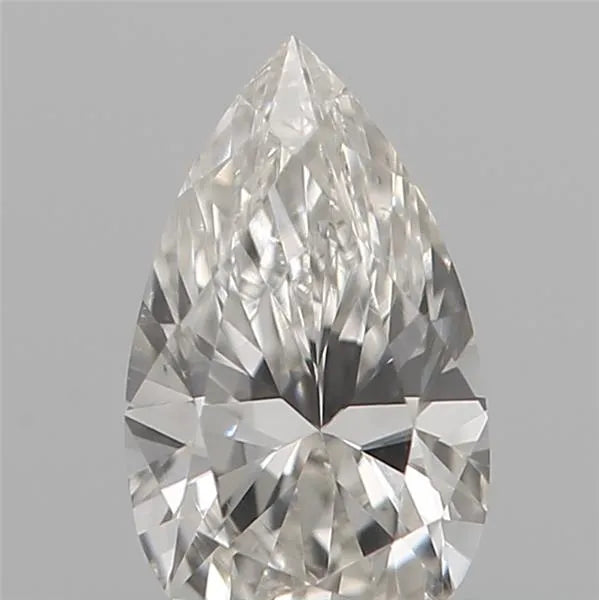
0.18ct Pear Natural Diamond (Colour G, Clarity VS1, Cut VG, IGI Certified)
$197.00
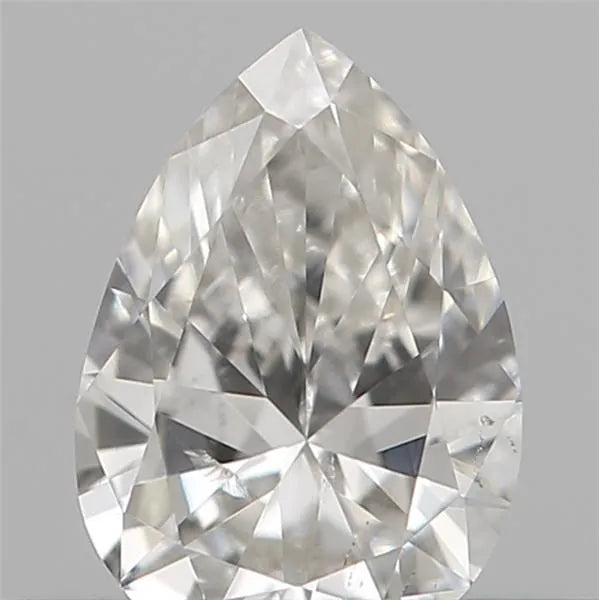
0.19ct Pear Natural Diamond (Colour H, Clarity SI1, Cut VG, IGI Certified)
$168.00
Loose & certified
Looking to pair it with a ring?
Every diamond on this page is loose — buy it on its own, set it into a ring of your own design, or pair it with one of our settings. Open any stone, click Set in a ring, and we’ll take you to your engagement, eternity or wedding band options.
Already have a setting in mind? Tap the menu icon and choose Engagement Rings › Ring Builder.
