-
Engagement ringsWedding ringsEternity ringsDiamondsGemstones
Three Stone Cushion Engagement Rings
What defines a three stone cushion engagement ring?
A three stone cushion engagement ring places a cushion-cut centre stone flanked by two side stones, all held within a single continuous mount. The cushion cut — characterised by its square or rectangular outline with softly rounded corners and a modified brilliant facet pattern — brings a distinctly softer quality to the three stone format compared with round or princess alternatives. The side stones are typically matching cushion cuts, though rounds or ovals are sometimes chosen to create contrast. What makes the combination distinctive is the way the cushion's broad, open table allows light to pool across all three stones simultaneously, giving the ring a generous, well-anchored presence on the finger.
How to choose side stones for a cushion three stone ring
For a three stone cushion ring, side stones should be proportioned at roughly 0.4ct to 0.6ct each when the centre stone sits between 0.75ct and 1.5ct — this keeps the visual balance without the sides overpowering the centre. Matching cushion-cut side stones produce the most cohesive look, as their rounded corners align cleanly with the centre stone's profile. Round brilliant sides are a practical alternative and cut slightly more cost. The metal choice affects this balance further: platinum or white gold maintains a neutral frame that lets all three stones read clearly, while yellow or rose gold introduces warmth that draws the cushion cut's softer facets forward. Whatever the metal, specify platinum or gold at consultation and our team will advise on proportions.
What does a three stone cushion ring cost in the UK?
The price of a three stone cushion engagement ring is shaped by the combined carat weight of all three stones, the cut quality of each cushion, and the metal selected. Because three stone rings require three graded, matched stones rather than one, the total stone spend is higher than a comparable solitaire at the same centre-stone size. Bridebook's US average engagement ring spend of $6,000 provides a useful reference point, though a well-matched three stone cushion set in platinum with certified diamonds will typically sit above that figure. Natural and lab-grown diamonds are both available; a lab-grown centre stone can free budget for higher colour or clarity grades across all three positions.
How long does a three stone cushion ring take to make?
Three stone cushion engagement rings are made to order in our Hatton Garden workshop, with a lead time of 7 to 14 business days from order confirmation. The process begins with a CAD design that maps the exact proportions of the cushion centre stone and its two side stones, followed by a silver or wax sample for try-on at our showroom before the final ring is cast. Intricate settings — such as a pavé bridge between the three stones or a hidden halo beneath the cushion centre — sit toward the 14-day end of that window. Every finished ring is hallmarked at the London Assay Office before insured UK delivery.
Caring for a cushion cut three stone ring day to day
Cushion cut diamonds are generally well-suited to daily wear — the rounded corners reduce the chipping risk associated with sharper cuts such as princess or marquise. In a three stone cushion setting, the main maintenance consideration is the prong or claw arrangement across all three stones: six or more claw heads secure the trio, and periodic checks every 12 to 18 months ensure none have shifted. Clean the ring with warm water and a soft brush to clear residue from beneath the cushion's broader table facets, where oils tend to accumulate. President Jewellers provides free lifetime resizing and a lifetime warranty on every ring.
Frequently asked questions
What is a three stone cushion engagement ring?
A three stone cushion engagement ring features a cushion-cut centre stone set between two matching side stones — typically also cushion cuts — within a single mount. The cushion cut's rounded corners and modified brilliant faceting give the three stone format a softer, broader appearance than equivalent rings built around sharper shapes. The three stones conventionally represent past, present, and future.
Are cushion cut side stones better than round in a three stone ring?
Matching cushion-cut side stones produce a more unified silhouette, as their rounded outlines follow the centre stone's profile closely. Round brilliant side stones are a practical alternative — they are slightly more cost-efficient and cut well — but the visual line between centre and sides is less continuous. The best choice depends on whether cohesion or contrast is the preferred outcome.
Can I choose a coloured gemstone as the centre stone?
Yes. Three stone cushion rings can be configured with a diamond, a fancy-colour diamond, or a gemstone — sapphire, ruby, and emerald are among the most frequently chosen. The cushion cut's open table and rounded outline suit many coloured stones well, as the broad facets allow saturated colour to read clearly across the centre position.
Is a lab-grown or natural diamond better for a three stone cushion ring?
Both are certified to the same standards — GIA, HRD, or IGI — and both are available at President Jewellers. Because a three stone setting requires three graded stones, a lab-grown centre stone can meaningfully reduce total spend, freeing budget for higher colour or clarity across all three positions. Natural diamonds retain stronger long-term resale value; lab-grown offers greater specification per pound.
What metals are available for a three stone cushion engagement ring?
Three stone cushion engagement rings are available in platinum or gold — including yellow, white, and rose gold across 9ct, 14ct, and 18ct. Platinum provides the most secure long-term claw setting and a cool, neutral frame. Yellow gold draws out warmth in lower-colour cushion diamonds; rose gold adds contrast without competing with the stone's own colouring.
Featured three stone cushion engagement rings
Hand-selected pieces from the President Jewellers catalogue
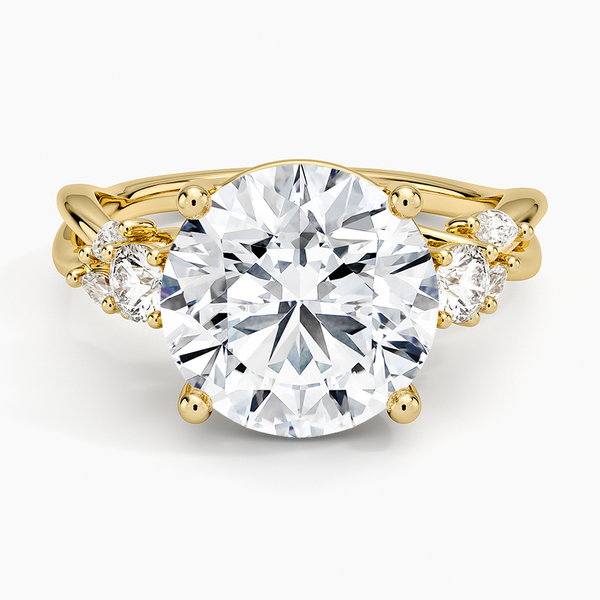
Willow Three Stone Diamond Engagement Ring
$2,161.00
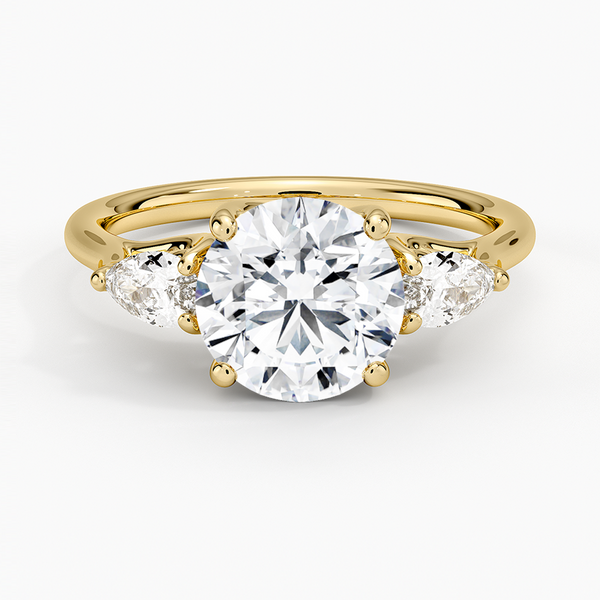
Trellis Three Stone Pear Diamond Engagement Ring
$3,114.00
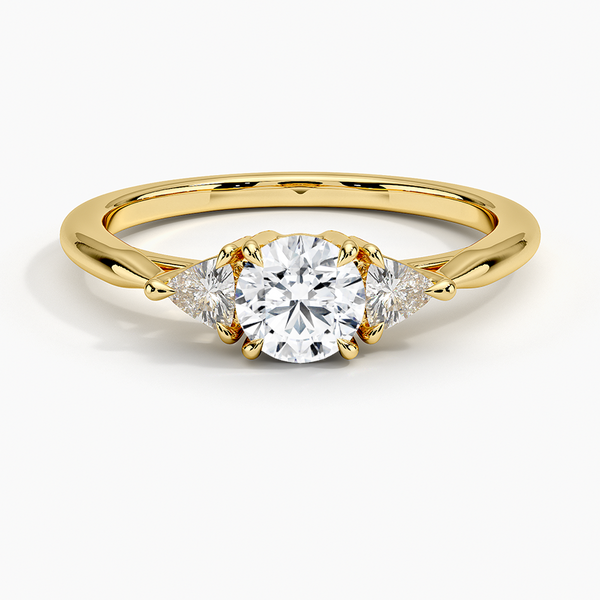
Trillion Cut Three Stone Diamond Engagement Ring
$1,855.00
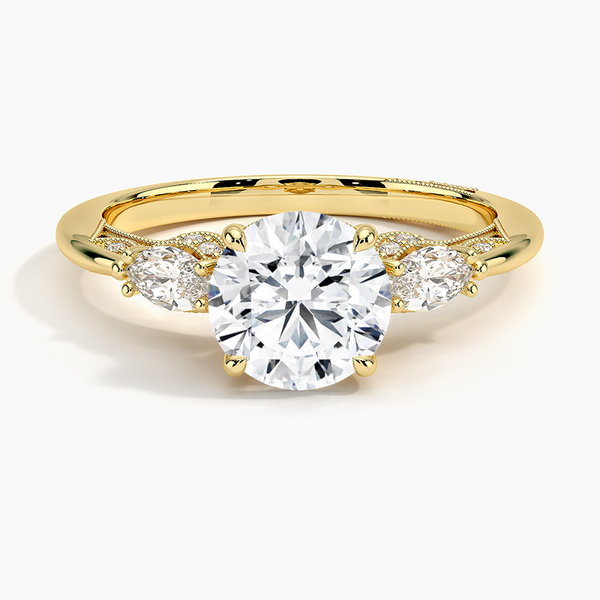
Simply Tacori Three Stone Marquise Diamond Engagement Ring
$5,426.00
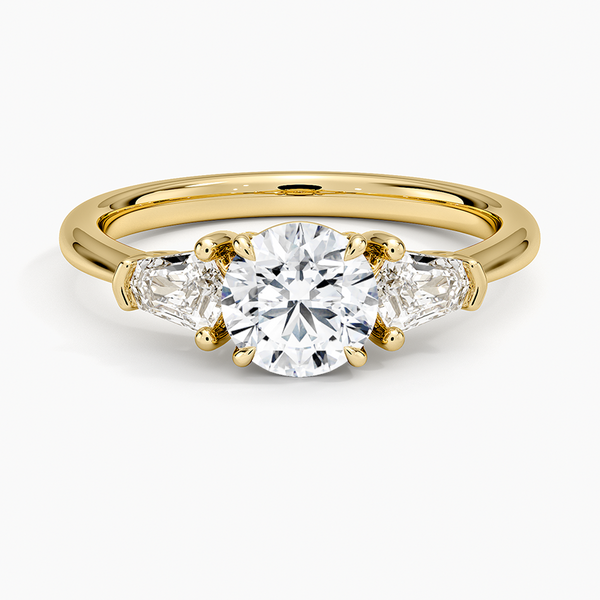
Shield Cut Three Stone Diamond Engagement Ring
$2,754.00
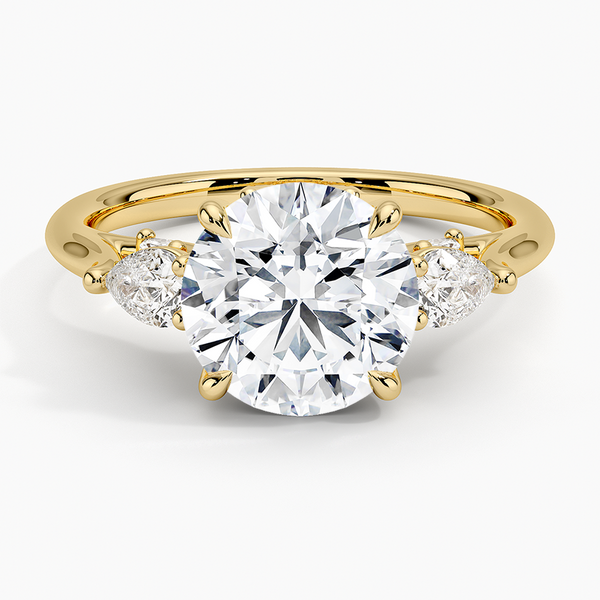
Secret Garden Gallery Three Stone Diamond Engagement Ring
$2,521.00
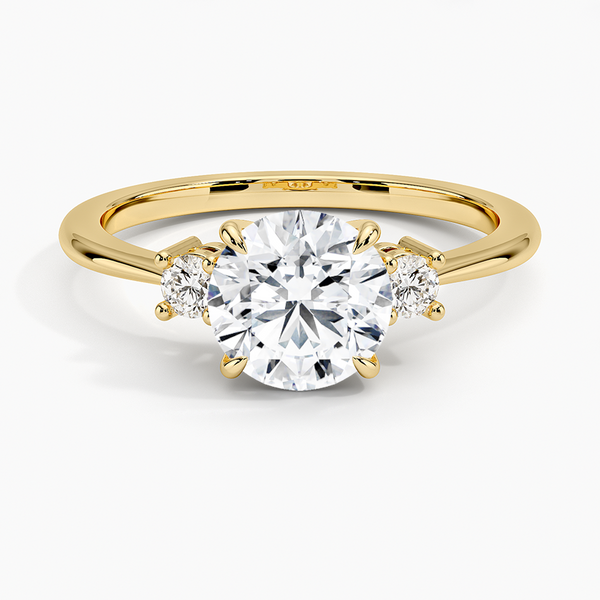
Petite Selene Three Stone Diamond Engagement Ring
$1,532.00
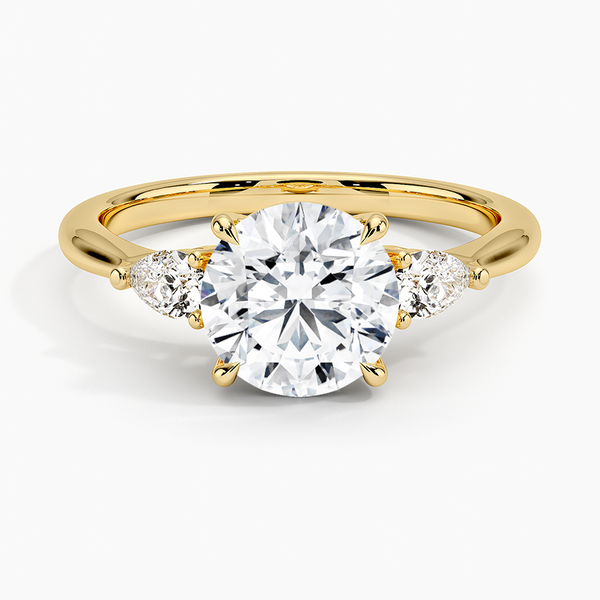
Petite Opera Three Stone Diamond Engagement Ring
$1,712.00
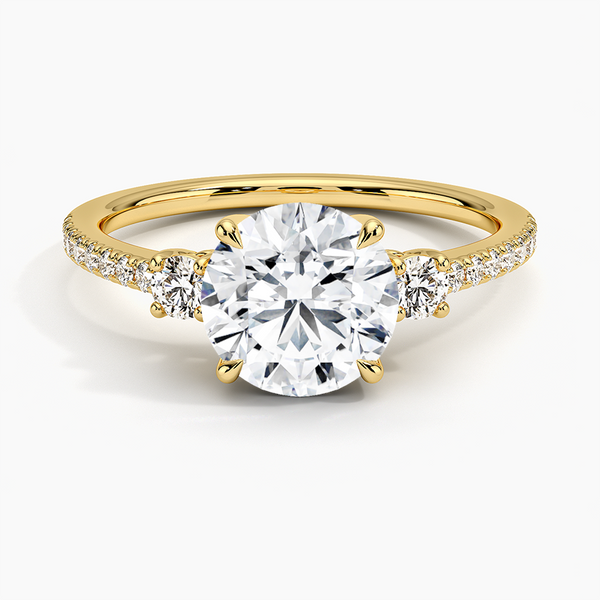
Lyra Three Stone Diamond Engagement Ring
$1,855.00
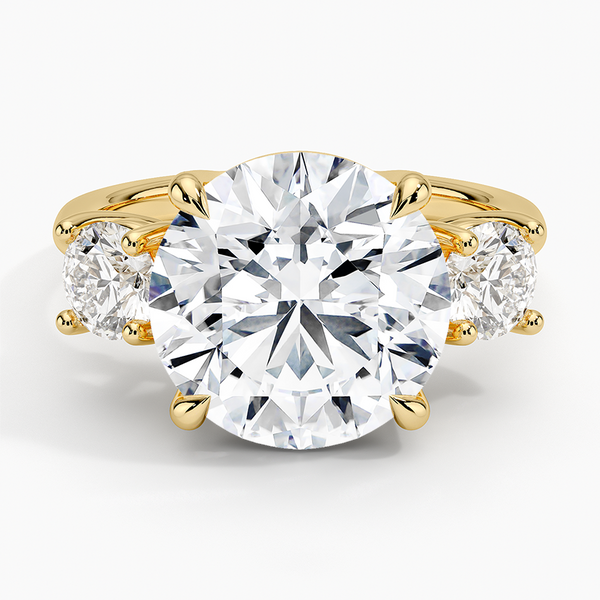
Luxe Selene Three Stone Diamond Engagement Ring
$3,294.00
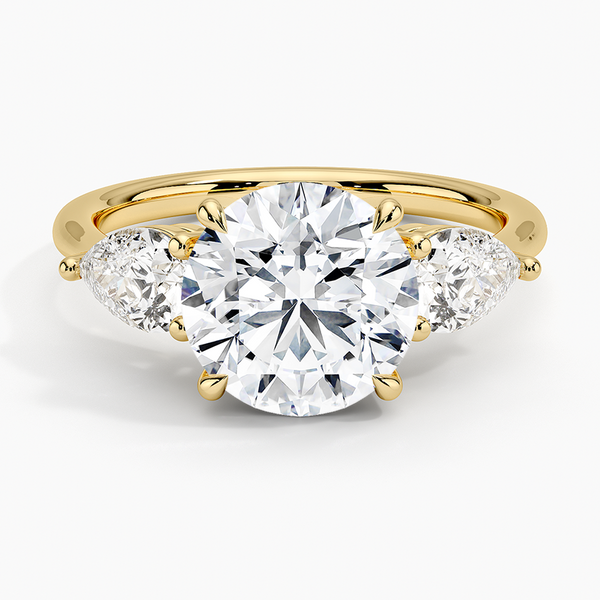
Luxe Opera Three Stone Diamond Engagement Ring
$3,653.00
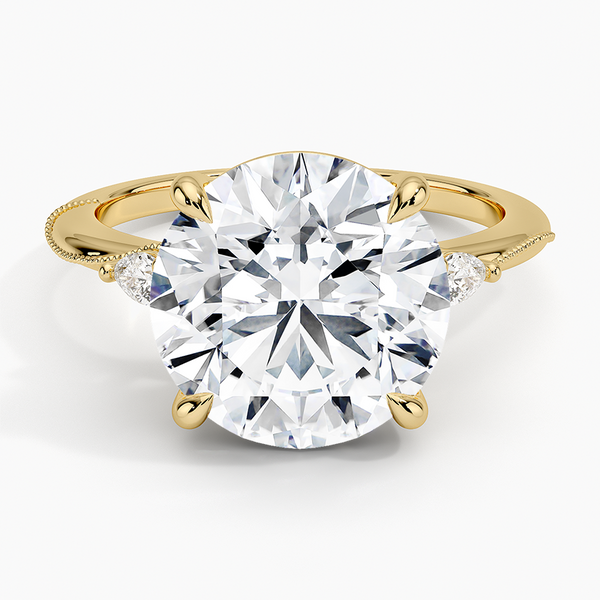
Camellia Three Stone Pear Diamond Engagement Ring
$1,586.00
You might also like
Related collections and pages from President Jewellers
Designing your ring
Designed online. Made by hand.
The convenience of online design.
-
Visualise it
Detailed CADs from every angle, so you see exactly what we’ll cast.
-
Try before we cast
Free ring sizers and a silver or wax sample to confirm the fit and feel before casting.
-
Hand-finished in London
Cast and finished in our London workshop and ready in 7–14 working days.
-
Risk-free
Every stone certified. Free refunds within 30 days (21 working) — no questions asked.
Three steps to your ring
-
1
Choose your starting point
-
2
Pair the two
-
3
We craft & deliver
What our customers say
From your first question to your finished ring — our Hatton Garden specialists are here throughout. Crafted for your forever.
From your first question to your finished ring — our Hatton Garden specialists are here throughout. Crafted for your forever.
