-
Engagement ringsWedding ringsEternity ringsDiamondsGemstones
Blue Lab Grown Fancy Diamonds
What is a blue lab grown fancy diamond?
A blue lab grown fancy diamond is a genuine diamond — chemically, optically and physically identical to a mined stone — grown in a laboratory and coloured blue through the introduction of boron during the growth process. Boron atoms replace a small proportion of carbon in the crystal lattice, absorbing red and yellow light wavelengths and transmitting blue. The depth of colour depends on boron concentration: trace amounts produce a faint or very light blue, while higher concentrations yield intense or vivid grades. GIA, HRD and IGI each grade blue lab grown diamonds on the same fancy-colour scale used for natural stones — from Faint through to Fancy Vivid — so the colour descriptor on the certificate carries the same meaning regardless of origin.
How do blue lab grown diamonds compare to natural blue diamonds?
Blue lab grown diamonds and natural blue diamonds share the same physical and optical properties, but differ substantially in rarity and price per carat. Natural blue diamonds are among the rarest coloured diamonds on earth — the blue colour in a mined stone results from boron absorbed over billions of years under extreme geological conditions. Lab grown equivalents replicate that boron-inclusion process in weeks, making Fancy Intense and Fancy Vivid blue grades far more accessible at a given budget. For buyers focused on visible colour saturation per pound spent, lab grown blue diamonds offer a clear advantage. For those placing weight on natural provenance and long-term resale, the natural blue diamond remains in a separate category — and both are available from President Jewellers.
What certification covers blue lab grown fancy diamonds?
Every blue lab grown fancy diamond offered here is certified by GIA, HRD or IGI — three internationally recognised grading laboratories that assess fancy-colour diamonds on colour grade, colour distribution, clarity, cut and carat weight. The colour grade is the most critical certificate entry for a blue diamond: look for the intensity descriptor (Fancy Light, Fancy, Fancy Intense, Fancy Vivid) alongside the secondary hue modifier, which may note a green-blue or grey-blue undertone. A greyish modifier typically reduces desirability; a pure blue or greenish-blue with no grey commands a premium. The certificate number is laser-inscribed on the girdle of the stone, allowing the document to be verified directly with the issuing laboratory.
What does a blue lab grown diamond cost in the UK?
Blue lab grown fancy diamonds vary in price according to colour intensity grade, carat weight, clarity and cut quality — with colour intensity being the dominant driver. A Fancy Light blue in a smaller carat weight sits at the more accessible end of the range, while a Fancy Vivid blue in a larger stone commands a significant premium. Lab grown production has made blue colour grades achievable at budgets where natural blue diamonds of comparable intensity would be far out of reach. Bridebook's US average engagement ring spend of $6,000 provides a useful reference point, though blue fancy-colour diamonds are frequently chosen for dress rings, pendants and gifts beyond the engagement-ring context.
How to set a blue lab grown diamond into a ring
When a blue lab grown diamond is selected for setting, the process moves to our Hatton Garden workshop, where design begins with CAD modelling followed by a silver or wax sample for try-on before casting. Metal choice significantly affects how the blue colour is perceived: platinum and white gold keep the stone's blue tone true to the certificate grade; yellow gold introduces warmth that can shift perception slightly toward green-blue; rose gold creates a contrast that lifts the blue by opposition. The finished ring is hallmarked at the London Assay Office and delivered by insured UK courier. Lead time runs to 7-14 business days from order confirmation, with more intricate settings at the longer end of that range.
Frequently asked questions
Are blue lab grown diamonds real diamonds?
Yes. Blue lab grown diamonds are chemically, physically and optically identical to mined diamonds. They are graded on the same fancy-colour scale by GIA, HRD or IGI and carry the same hardness rating of 10 on the Mohs scale. The only difference from a natural blue diamond is origin — laboratory rather than geological formation.
What causes the blue colour in a lab grown diamond?
The blue colour is caused by boron. During the growth process, boron atoms are introduced into the crystal lattice in place of carbon. Boron absorbs red and yellow wavelengths of light, allowing blue wavelengths to pass through. The concentration of boron determines colour intensity — from a faint blue at trace levels to Fancy Vivid blue at higher concentrations.
Which certification should I look for on a blue lab grown diamond?
GIA, HRD and IGI are the three recognised laboratories for fancy-colour lab grown diamond certification. Each issues a grading report that includes the colour intensity grade, any secondary hue modifier, clarity, carat weight and cut. The colour intensity descriptor — Fancy Light through to Fancy Vivid — is the most important entry for a blue lab diamond.
Can I return a blue lab grown diamond if it is not right?
Loose blue lab grown diamonds purchased from President Jewellers are returnable within 30 days, no questions asked, with no exclusions. Complimentary insured UK delivery is included. If the stone has already been set into a ring as a bespoke or custom order, the ring return policy applies separately — please enquire at point of order.
How long does it take to have a blue lab grown diamond set into a ring?
Once a blue lab grown diamond is selected, the ring design and making process takes 7-14 business days from order confirmation at our Hatton Garden workshop. A silver or wax sample is produced for approval before the metal is cast, and the finished ring is hallmarked at the London Assay Office before insured delivery.
Featured blue lab grown fancy diamonds
Hand-selected pieces from the President Jewellers catalogue

1.02ct Cushion modified Lab Grown Diamond (Colour Fancy Blue, Clarity VS1, IGI Certified)
$416.00

1.04ct Asscher Lab Grown Diamond (Colour Fancy Intense Blue, Clarity VS1, IGI Certified)
$311.00
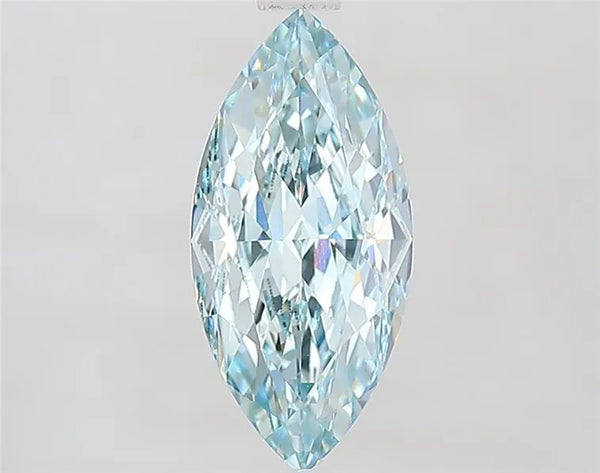
2.07ct Marquise Lab Grown Diamond (Colour Fancy Greenish Blue, Clarity VVS2, IGI Certified)
$1,056.00
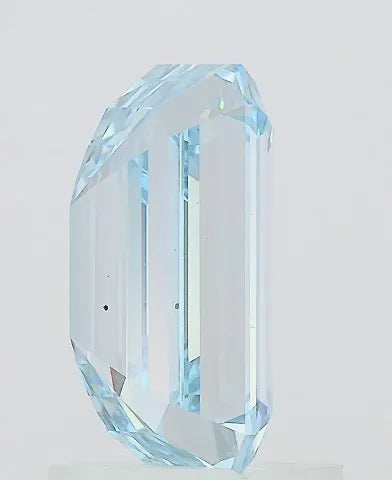
2.09ct Emerald Lab Grown Diamond (Colour Fancy Vivid Blue, Clarity SI1, IGI Certified)
$394.00
You might also like
Related collections and pages from President Jewellers
Loose & certified
Looking to pair it with a ring?
Every diamond on this page is loose — buy it on its own, set it into a ring of your own design, or pair it with one of our settings. Open any stone, click Set in a ring, and we’ll take you to your engagement, eternity or wedding band options.
Already have a setting in mind? Tap the menu icon and choose Engagement Rings › Ring Builder.
What our customers say
From your first question to your finished ring — our Hatton Garden specialists are here throughout. Crafted for your forever.
From your first question to your finished ring — our Hatton Garden specialists are here throughout. Crafted for your forever.
