Radiant Natural Diamonds
What defines a radiant natural diamond?
A radiant natural diamond is defined by its trimmed corners, rectangular or square outline, and a 70-facet brilliant-cut pattern applied to both crown and pavilion — a combination first patented by Henry Grossbard in 1977. This facet arrangement was specifically engineered to bring round-brilliant levels of light return to a fancy shape, and the result is a stone that disperses white and coloured light across its full face rather than concentrating it in a narrow pattern. Unlike the step-cut facets of an emerald or Asscher, the radiant's crushed-ice interior catches ambient light from multiple angles simultaneously. Natural radiant diamonds are mined and formed over billions of years under geological pressure, meaning each stone carries minor inclusions and colour characteristics unique to its origin. That individuality is part of what draws buyers to natural over lab-grown: no two radiant naturals are identical, and the stone's certificate records a geological fingerprint that belongs to it alone.
How to choose the right radiant natural diamond for your setting
The most important consideration when selecting a radiant natural diamond is the length-to-width ratio. Ratios between 1.00 and 1.05 produce a near-square outline; ratios from 1.25 to 1.35 give the more familiar elongated rectangle. On shorter fingers, a ratio around 1.20 to 1.30 draws the eye along the finger and creates the impression of length. On broader fingers, the square radiant tends to sit more proportionally. Because the radiant cut's brilliant facets generate substantial scintillation across its surface, inclusions in the VS2 to SI1 clarity range are often masked more effectively than they would be in a step-cut stone — making radiant naturals relatively forgiving at mid-range clarity grades. For colour, the rectangular brilliant pattern can retain warmth, so many buyers in the J–K range find a warmer-coloured metal setting flatters the stone; those prioritising a cooler white appearance typically choose G or above. Every radiant natural diamond in this collection is certified by GIA, HRD or IGI, so the grading report specifies the precise colour, clarity, and dimensions before purchase.
What does a radiant natural diamond cost in the UK?
Radiant natural diamonds are generally priced below round brilliants of equivalent carat weight, colour, and clarity, because the radiant cut produces more waste from rough than a round — yet demand for rounds has historically outpaced demand for fancy shapes, keeping round premiums high. The gap narrows at larger carat weights, where well-proportioned radiant naturals above 1.5ct attract strong collector interest. Bridebook's US average engagement ring spend of $6,000 reflects total ring budget, but the stone itself typically accounts for the majority of that cost. For radiant naturals specifically, the 70-facet brilliant pattern means cutters must achieve precise symmetry across both crown and pavilion to avoid the 'windmill' effect — a dark four-arm shadow visible face-up in poorly cut stones — and well-cut certified specimens command a corresponding premium over poorly graded equivalents.
How long does it take to have a radiant natural diamond set into a ring?
Selecting a loose radiant natural diamond and having it set into one of our rings is a two-stage process. The stone ships under complimentary insured UK delivery and carries a 30-day no-questions return window as a loose stone. Once a setting is confirmed, our Hatton Garden workshop proceeds through CAD design, a silver or wax sample for try-on, casting, setting, finishing, and hallmarking at the London Assay Office. That ring-production stage takes 7 to 14 business days from order confirmation, with simpler solitaire settings at the shorter end and intricate pavé or bespoke designs at the longer end. The radiant shape's trimmed corners mean a four-claw or eight-claw setting is standard — protecting those corners while keeping the diamond's face fully visible. The finished ring is returned under insured UK delivery.
Caring for and wearing a radiant natural diamond
Radiant natural diamonds share the same hardness as all diamonds — 10 on the Mohs scale — and are well suited to daily wear. The trimmed corners of a radiant cut remove the sharp points that make princess and marquise shapes more vulnerable to chipping, giving the radiant better practical durability for active wearers. Routine care involves cleaning with warm water, mild dish soap, and a soft brush to clear the buildup that collects beneath the pavilion facets, which the brilliant-cut pattern makes particularly prone to collecting oils from the skin. Storing the ring separately from other pieces avoids contact scratching on the metal setting. Because the radiant natural diamond's brilliant facets are cut deeper than step-cut equivalents, the stone sits slightly higher in most settings — worth considering when choosing a ring to pair alongside a wedding band. A low-profile setting or a flush-fitting band resolves any height difference neatly.
Frequently asked questions
Where can I buy a certified radiant natural diamond in the UK?
Radiant natural diamonds certified by GIA, HRD or IGI are available here at President Jewellers, sourced through ethical-mine partners. Each stone can be purchased loose with complimentary insured UK delivery and a 30-day return window, or set into a ring crafted in our Hatton Garden workshop.
What length-to-width ratio should a radiant natural diamond have?
For a square appearance, choose a radiant natural diamond with a length-to-width ratio between 1.00 and 1.05. For the classic rectangular outline, ratios from 1.20 to 1.35 are most common. The grading certificate for every stone in our collection states the exact dimensions, so the ratio can be confirmed before purchase.
Are radiant natural diamonds more affordable than round diamonds?
Generally, yes. Radiant natural diamonds of equivalent carat weight, colour, and clarity are typically priced below round brilliants, primarily because round diamonds command a sustained demand premium. The price advantage narrows at larger carat weights and for very well-cut specimens with strong symmetry grades.
What is the difference between a radiant and a princess cut natural diamond?
Both are brilliant-cut square or rectangular shapes, but a radiant natural diamond has trimmed corners, making it more resistant to chipping than a princess cut, which retains sharp 90-degree corners. The radiant's deeper brilliant-cut pavilion also tends to produce a more dispersed, crushed-ice light pattern compared to the princess cut's more structured scintillation.
Can I return a radiant natural diamond if it does not suit the setting?
Yes. All loose radiant natural diamonds carry a 30-day return policy with no questions asked and no exclusions. Once a stone has been set into a ring, the ring's own returns policy applies — 30 days for standard orders, with custom and bespoke orders excluded.
How much does a 1 carat radiant natural diamond cost in the UK?
A 1 carat radiant natural diamond in the US typically ranges from around $3,300 to $8,600 depending on colour, clarity, cut and length-to-width ratio. Radiant cuts retain more of the rough crystal than rounds, so they typically sit 10-15 per cent below an equivalent round at the same grade. A 1ct radiant at G colour, VS clarity with a balanced 1.20-1.30 elongated ratio commonly sits in the $4,650 to $6,600 band with GIA, IGI or HRD certification. The radiant's dense criss-cross facet pattern conceals inclusions better than step cuts, so SI1 clarity can still face up eye-clean — releasing budget for carat weight or a higher colour grade.
Why are radiant cut diamonds more durable than princess cuts?
A radiant cut and a princess cut share a square or rectangular brilliant outline, but a radiant has trimmed corners while a princess retains sharp 90-degree corners. Those sharp corners are the most chip-vulnerable points of a princess diamond — a single hard knock can cause a corner to break, with the only repair being recutting. The radiant's cropped corners distribute impact across a larger area, making the shape significantly more resistant to chipping in daily wear. For active wearers or buyers concerned about long-term durability, this is one of the strongest practical advantages of choosing a radiant natural diamond over a princess cut.
Featured radiant natural diamonds
Hand-selected pieces from the President Jewellers catalogue
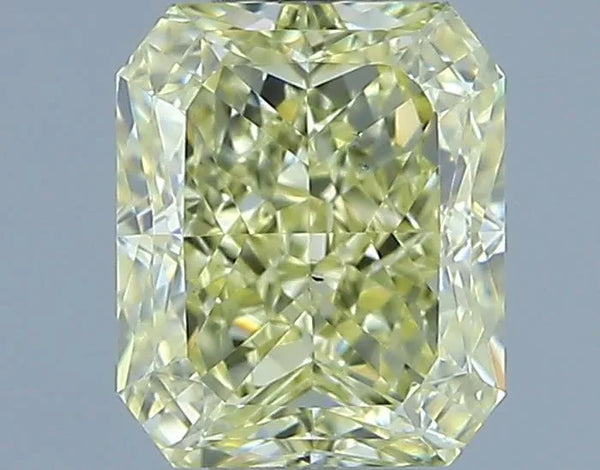

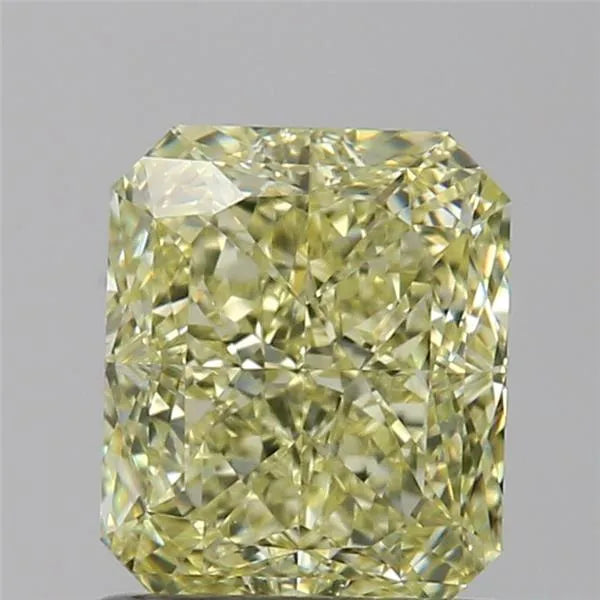
Loose & certified
Looking to pair it with a ring?
Every diamond on this page is loose — buy it on its own, set it into a ring of your own design, or pair it with one of our settings. Open any stone, click Set in a ring, and we’ll take you to your engagement, eternity or wedding band options.
Already have a setting in mind? Tap the menu icon and choose Engagement Rings › Ring Builder.
